


 English

News
Tue 06 , 2026
In the automotive manufacturing industry, precision mold design is the foundation of high-quality plastic components. From interior trim panels to functional structural parts, every automotive plastic component depends on a well-engineered mold to ensure dimensional accuracy, surface quality, and long-term production consistency.
The Chevy C6 Mold Design project demonstrates how advanced automotive injection mold engineering can support complex vehicle component production while meeting strict OEM quality standards. Through optimized mold structure design, advanced manufacturing technologies, and rigorous quality control processes, automotive manufacturers can achieve greater production efficiency and superior product performance.
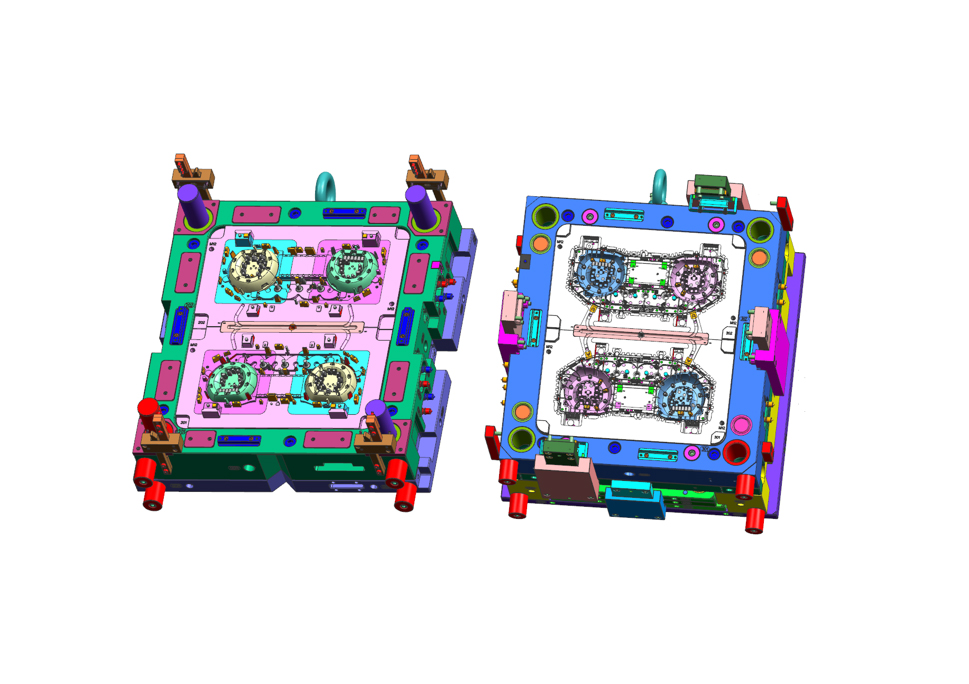
Automotive plastic parts are becoming increasingly important as manufacturers seek to reduce vehicle weight, improve fuel efficiency, and enhance overall vehicle performance. However, producing high-precision automotive components requires molds capable of maintaining tight tolerances throughout large-scale production cycles.
A professionally designed automotive mold directly impacts product quality, production efficiency, material utilization, and manufacturing costs. Even minor design improvements can significantly reduce cycle times and improve part consistency during mass production.
Before mold development begins, engineers perform detailed analysis of the plastic component geometry. This process identifies potential challenges such as undercuts, thin wall sections, complex curves, and dimensional requirements.
For Chevy C6 automotive components, maintaining dimensional precision is essential to ensure proper fitment with surrounding vehicle assemblies.
Advanced mold flow simulation software allows engineers to predict material flow behavior before manufacturing begins. By analyzing filling patterns, pressure distribution, weld lines, and cooling performance, potential production issues can be identified and corrected during the design stage.
This proactive approach reduces development costs while improving final product quality.
Efficient cooling is one of the most critical aspects of automotive mold design. Proper cooling channel layout helps maintain uniform temperature distribution throughout the mold cavity, reducing warpage, shrinkage, and cycle times.
Optimized cooling systems contribute directly to improved production efficiency and reduced manufacturing costs.
| Design Feature | Benefit |
|---|---|
| Precision Mold Cavities | Improved dimensional accuracy |
| Optimized Cooling Channels | Shorter production cycles |
| Advanced Venting Systems | Reduced air traps and defects |
| High-Quality Tool Steel | Extended mold lifespan |
| Hot Runner Systems | Reduced material waste |
| Automated Ejection Systems | Consistent part removal |
Automotive injection molds are designed to process a wide range of engineering plastics depending on application requirements.
ABS (Acrylonitrile Butadiene Styrene)
PP (Polypropylene)
PC (Polycarbonate)
PA (Nylon)
PC/ABS Blends
PBT (Polybutylene Terephthalate)
Glass Fiber Reinforced Plastics
High-Performance Engineering Resins
Each material presents unique molding challenges that must be considered during mold design and manufacturing.
Modern automotive OEMs require suppliers capable of delivering molds that support high-volume production while maintaining strict quality standards.
Professional mold engineering provides several significant advantages:
Reduced development lead times
Improved dimensional consistency
Lower production costs
Enhanced surface finish quality
Reduced maintenance requirements
Extended mold service life
Higher manufacturing efficiency
Automotive molds are used to manufacture a wide range of vehicle components, including:
Dashboard assemblies
Interior trim panels
Center console components
Door panel systems
Engine compartment covers
Lighting housings
Air duct systems
Exterior decorative components
Structural plastic components
Every vehicle program has unique design requirements, production volumes, and quality standards. Custom mold design services allow manufacturers to optimize tooling solutions based on specific project goals.
Through close collaboration between design engineers, mold manufacturers, and production teams, custom tooling solutions help maximize production efficiency while ensuring consistent product quality throughout the entire manufacturing lifecycle.
Automotive injection mold design is the engineering process of developing molds used to manufacture plastic vehicle components through injection molding technology.
Mold flow analysis helps predict material behavior, reduce defects, improve filling performance, and optimize overall mold design before manufacturing begins.
Development timelines vary depending on component complexity, mold size, and project requirements, typically ranging from several weeks to several months.
ABS, PP, PC, PA, PBT, and reinforced engineering plastics are among the most commonly used materials in automotive injection molding.
As automotive manufacturers continue to demand lighter, stronger, and more complex plastic components, precision mold design remains a critical factor in production success. Advanced Chevy C6 mold design techniques demonstrate how modern automotive tooling solutions can improve efficiency, reduce costs, and deliver consistent product quality for high-volume manufacturing environments.
For OEMs, Tier 1 suppliers, and automotive component manufacturers, investing in professional automotive mold design services is essential for maintaining competitiveness in today's rapidly evolving automotive industry.
We attach great importance to the customers' demands for product quality and rapid production.
We always believe that meeting the customers' needs is the realization of our value!