


 English

In modern plastic manufacturing, every component of an injection molding machine plays an important role in maintaining production stability and product quality. From the hopper and screw system to the mold cavity, each part affects material flow, melting performance, and the final appearance of molded components.
Among these important components, the feed throat injection molding system is a critical area that controls how plastic resin enters the barrel before the melting and injection process begins. Understanding the function of the feed throat helps manufacturers improve production efficiency, reduce defects, and achieve more consistent injection molded parts.
As an experienced injection mold manufacturer, Youking Mould focuses on precision mold Design, advanced manufacturing processes, and customized plastic injection molding solutions for customers worldwide.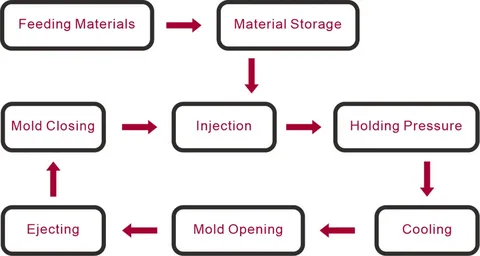
What Is a Feed Throat in Injection Molding?
The feed throat is the connection section between the hopper and the barrel of an injection molding machine. It allows plastic pellets or resin materials to enter the barrel smoothly before they are heated, melted, and pushed forward by the screw.
In the feed throat injection molding process, maintaining stable material feeding is essential because inconsistent resin flow can affect melting conditions, injection pressure, and final product quality.
A properly designed feed throat helps ensure:
Stable plastic material feeding
Consistent melting performance
Reduced material blockage
Improved injection molding efficiency
How Does an Injection Molding Feed Throat Work?
The injection molding process starts when plastic pellets are loaded into the hopper. These pellets pass through the feed throat and enter the heated barrel, where the rotating screw melts and mixes the material.
The basic material flow process includes:
Plastic pellets enter through the hopper
Material passes through the feed throat
The screw transports and melts the resin
Molten plastic is injected into the mold cavity
The molded part is cooled and removed
A stable feeding system is especially important for high-precision applications where small variations in material flow may influence dimensional accuracy and surface quality.
Common Feed Throat Problems in Injection Molding
1. Material Bridging
Material bridging occurs when plastic pellets form a blockage above the feed throat, preventing smooth resin flow into the barrel. This problem may lead to inconsistent filling and production interruptions.
Common causes include:
Moisture in plastic materials
Poor pellet flow characteristics
Improper hopper design
Incorrect material storage conditions
2. Unstable Material Feeding
When the feed throat cannot supply resin consistently, injection molding machines may experience unstable pressure, uneven filling, and variations in finished parts.
Manufacturers should regularly check feeding systems and optimize machine parameters to maintain stable production.
3. Resin Melting in the Feed Throat Area
The feed throat area usually requires proper cooling to prevent plastic materials from melting too early. Premature melting can cause feeding problems and reduce production efficiency.
Temperature control, material selection, and machine maintenance are important factors in preventing this issue.
The Relationship Between Feed Throat and Injection Mold Quality
Although the feed throat controls the initial material supply, the final quality of injection molded parts depends on the complete manufacturing system, including machine settings, material selection, and mold structure.
Professional injection mold design ensures proper filling, cooling, and part ejection, helping manufacturers achieve stable production results.
For complex plastic components, working with an experienced custom injection mold manufacturer allows companies to optimize the entire process from product development to mass production.
How Manufacturers Improve Injection Molding Efficiency
To achieve reliable injection molding performance, manufacturers should focus on several key areas:
Regular cleaning and maintenance of machine components
Proper drying and storage of plastic resin
Optimized injection molding parameters
Accurate mold design and manufacturing
Continuous quality inspection during production
For advanced applications such as multi-material components, 2K injection molding technology provides additional possibilities by combining two materials or colors in a single production process.
Why Choose Youking Mould for Injection Mold Manufacturing?
Youking Mould provides professional mold manufacturing solutions for global customers, specializing in precision injection molds, custom Tooling, and plastic injection molding applications.
With expertise in mold design, precision machining, and production management, Youking Mould helps customers develop high-quality plastic components with reliable performance and competitive manufacturing efficiency.
Learn more about our plastic injection molding services and discover how professional mold solutions can support your next project.
Conclusion
The feed throat injection molding system is a small but essential part of the injection molding process. By ensuring stable material feeding and proper machine operation, manufacturers can reduce production problems and improve product consistency.
Together with advanced mold design, precision manufacturing, and professional injection molding technology, a well-maintained feeding system helps companies achieve higher-quality plastic products and more efficient production.