


 English

News
Thu 08 , 2026
plastic injection molding is a widely used manufacturing process for producing precise plastic parts in large quantities. It uses an injection molding machine to melt plastic material and inject it into a specially Designed mold cavity. After the material cools and solidifies, the finished part is ejected from the mold.
The quality of the finished component depends on the entire process, including mold design, material selection, injection parameters, cooling, and part inspection. Understanding how injection molding works can help product designers and manufacturers develop more reliable and cost-effective plastic components.
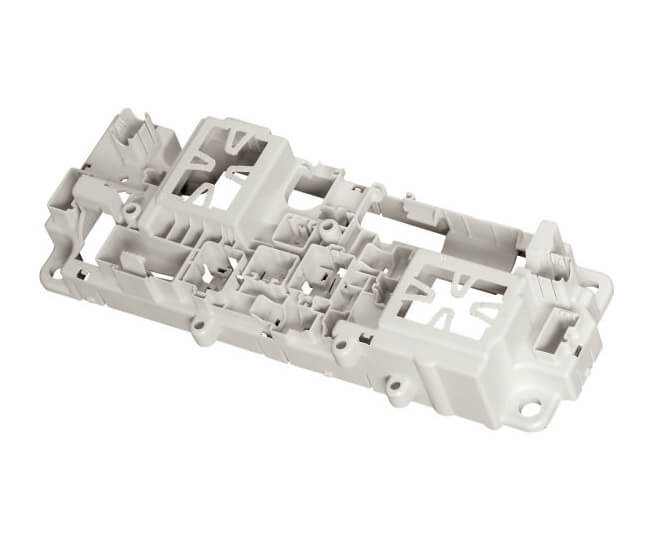
Plastic injection molding is a manufacturing method in which thermoplastic material is heated until it becomes molten and then injected into a mold under controlled pressure. The mold determines the shape, dimensions, surface details, and other features of the final product.
Once the molten plastic enters the mold cavity, it begins to cool. After sufficient cooling and solidification, the mold opens and an ejection system removes the finished part.
In simple terms: plastic material is melted, injected into a mold, cooled, and ejected to create a finished plastic component.
A typical injection molding cycle consists of several key stages. Each stage affects the quality and consistency of the finished plastic part.
The process begins with the injection mold being installed in the molding machine. The two halves of the mold are aligned and securely clamped together before injection begins.
The mold contains one or more cavities that define the shape of the finished component. Proper mold design and alignment are important for maintaining dimensional accuracy during production.
Plastic pellets are supplied to the injection molding machine through the hopper. The material then enters a heated barrel where it is gradually heated and transformed into a molten state.
Different plastic materials have different melting temperatures and processing requirements. Material selection should therefore match the mechanical, thermal, chemical, and dimensional requirements of the final product.
Once the plastic reaches the appropriate processing condition, a screw mechanism pushes the molten material forward and injects it into the mold cavity through the runner and gate system.
Injection speed and pressure need to be controlled according to the material, mold design, and part geometry. Proper filling helps reduce defects and ensures that important features of the mold are reproduced accurately.
After the mold cavity is filled, additional pressure can be applied to compensate for material shrinkage as the plastic begins to cool.
The holding stage can have an important effect on part weight, dimensions, and surface quality. The appropriate pressure and holding time depend on the material and product design.
Cooling is an important stage of the injection molding cycle. Cooling channels inside the mold help remove heat from the plastic so that the component can solidify sufficiently before ejection.
An effective cooling system can help improve cycle consistency and reduce the risk of dimensional changes or deformation. Cooling time must be balanced with production efficiency because excessive cooling can increase the overall cycle time.
After the plastic part has cooled sufficiently, the clamping unit opens the mold. The ejection system then pushes the finished component away from the mold surface.
The ejection system needs to be properly positioned to avoid unnecessary marks, deformation, or damage to the finished part.
After ejection, finished parts can be inspected for dimensions, appearance, surface quality, and other customer requirements. If the parts meet the required specifications, the machine continues with the next molding cycle.
For high-volume production, maintaining consistent process parameters is essential for producing uniform parts from cycle to cycle.
An injection molding machine provides the mechanical and thermal functions required to complete the molding cycle. Its main systems include the injection unit and clamping unit, together with temperature control and other supporting systems.
| Machine Function | Purpose |
|---|---|
| Injection Unit | Melts and injects plastic material into the mold. |
| Clamping Unit | Holds the mold closed during injection and opens it for ejection. |
| Temperature Control | Controls material and mold temperatures during production. |
| Ejection System | Removes the solidified plastic part from the mold. |
The mold is one of the most important components of the plastic injection molding process because it determines the geometry of the finished part. Mold design must take into account part dimensions, wall thickness, draft angles, gates, runners, cooling channels, and ejection requirements.
A well-designed mold can support stable production and consistent part quality. Poor mold design, on the other hand, can contribute to filling problems, uneven cooling, excessive shrinkage, flash, or difficulty during ejection.
Producing consistent plastic parts requires the mold, material, machine, and process parameters to work together. Important factors include:
Material: Different plastics require different processing temperatures and conditions.
Mold design: Cavity geometry, gates, runners, cooling, and ejection influence part quality.
Injection pressure: Appropriate pressure helps fill the mold cavity effectively.
Injection speed: Proper speed can improve filling consistency and surface quality.
Cooling: Uniform cooling helps control shrinkage and dimensional stability.
Process control: Stable machine parameters help maintain consistency during mass production.
When a product requires specific dimensions, complex geometry, tight tolerances, or customized surface details, the injection mold needs to be designed around the individual part.
Custom mold development generally involves reviewing the product design, analyzing manufacturability, designing the mold structure, manufacturing the Tooling, testing the mold, and optimizing the molding process.
This makes custom plastic injection molding suitable for applications where standard components cannot meet the required specifications.
So, how does plastic injection molding work? The process starts by preparing and clamping the mold, followed by melting plastic material and injecting it into the mold cavity. The material is then packed, cooled, and solidified before the mold opens and the finished part is ejected.
The final quality depends on the interaction between the injection molding machine, mold design, plastic material, and processing parameters. Careful control of each stage can help manufacturers achieve consistent and precise plastic parts for different applications.
```
We attach great importance to the customers' demands for product quality and rapid production.
We always believe that meeting the customers' needs is the realization of our value!