


 English

News
Fri 11 , 2026

injection molding is widely used in the automotive industry to manufacture plastic components with consistent dimensions, complex shapes, and reliable production quality. From interior dashboards and door panels to exterior bumpers and under-the-hood components, automotive injection molding supports the production of both functional and decorative parts.
As vehicles incorporate more electronic systems and lightweight materials, injection molding has become an important manufacturing process for modern automotive components.
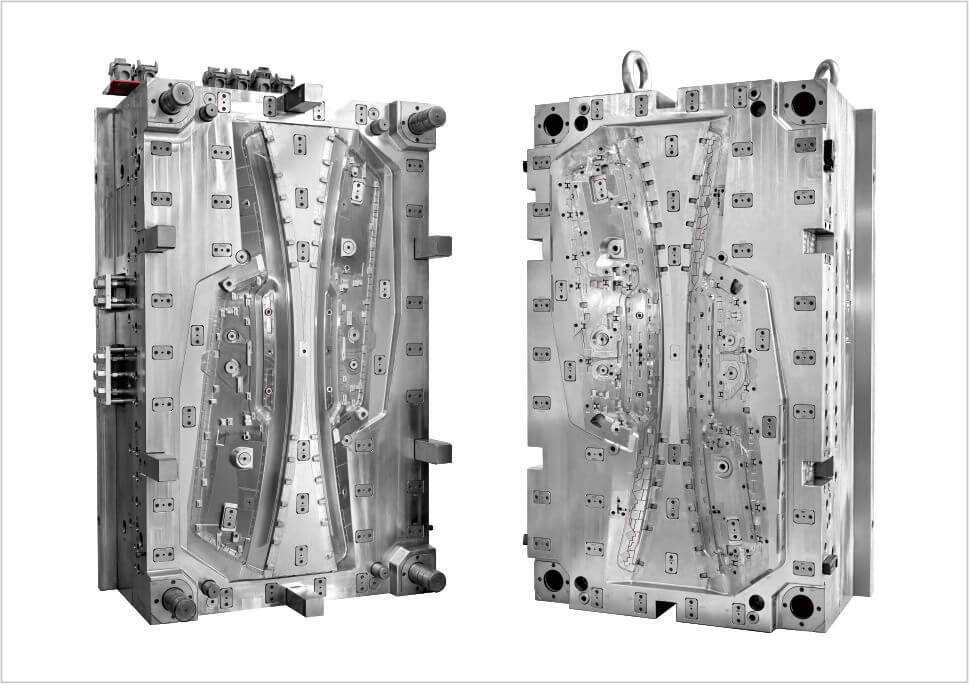
Automotive injection molding is used to produce a wide range of plastic parts for different vehicle systems. Common applications include:
Interior components: Dashboards, door panels, center consoles, air vents, cup holders, and seat adjustment covers.
Exterior components: Bumper components, grille sections, mirror housings, wheel covers, and protective trim.
Under-the-hood parts: Engine covers, fluid reservoirs, air intake components, and electrical housings.
Electrical components: Sensor housings, connector housings, switch components, and wiring protection parts.
For example, a vehicle dashboard may contain several injection-molded plastic components. These parts are Designed to fit together with specific dimensions while providing space for displays, switches, ventilation systems, and other equipment.
Automotive manufacturers choose injection molding because it supports consistent production, complex designs, and material flexibility.
Lightweight Construction
Replacing certain metal components with engineering plastics can reduce vehicle weight. Lower component weight may contribute to improved fuel economy in conventional vehicles and increased driving range in electric vehicles. The actual benefit depends on the component design and material selection.
Consistent Part Quality
Injection molding uses controlled mold cavities and processing parameters to produce repeatable components. This is important for automotive parts that must meet dimensional tolerances and fit specific assembly requirements.
Suitable for Large-Volume Production
Once the mold is developed and validated, injection molding can produce large quantities of identical parts. For example, automotive clips, interior fasteners, and dashboard components may be manufactured in repeated production cycles to support vehicle assembly schedules.
Design Flexibility
Injection molding allows manufacturers to produce complex geometries, integrated mounting points, ribs, and other structural features. This can reduce the need for separate components and additional assembly operations.
Material selection depends on the component's location, mechanical requirements, temperature exposure, and environmental conditions.
Common automotive plastics include:
Polypropylene (PP): Frequently used for interior trim, bumpers, and storage compartments because of its low density and chemical resistance.
ABS: Commonly selected for dashboards, interior panels, and decorative components because of its impact resistance and surface finish.
Polyamide (PA): Also known as nylon, it is used in selected under-the-hood and mechanical components because of its strength and heat resistance.
Polycarbonate (PC): Used in applications requiring impact resistance and dimensional stability.
PC/ABS: Combines properties of polycarbonate and ABS, making it suitable for various automotive interior and electronic housing applications.
For example, polypropylene is commonly used in bumper systems, while glass-fiber-reinforced polyamide may be selected for components exposed to higher mechanical loads and temperatures.
Automotive injection molding generally involves several key production stages.
Product Design: Engineers develop the component design based on installation requirements, mechanical performance, and material properties.
Mold Manufacturing: A mold is designed and manufactured according to the required part geometry and production volume.
Plastic Injection: Plastic pellets are heated until molten and injected into the mold cavity under controlled pressure.
Cooling and Ejection: The material cools and solidifies before the finished component is ejected.
Quality Inspection: Components are checked for dimensions, appearance, defects, and other product-specific requirements.
For example, when manufacturing an automotive electrical housing, dimensional inspection and fit testing help confirm that the molded part can accommodate the internal electronic components and connect correctly with other assemblies.
Selecting a suitable manufacturing partner involves more than comparing production costs. Several factors should be evaluated:
Mold design capabilities: Check whether the manufacturer can develop molds that meet the component's structural and dimensional requirements.
Material knowledge: Different automotive applications require different material properties, including impact resistance, heat resistance, and chemical compatibility.
Quality control: Ask about dimensional inspection, material traceability, process monitoring, and product testing.
Production capacity: Confirm that the manufacturer can support the required order volume and delivery schedule.
Engineering support: Design for manufacturability (DFM) reviews can help identify potential molding problems before mass production.
For automotive projects, early communication between the product designer, mold maker, and injection molding manufacturer can reduce design changes and production issues.
Injection molding plays an important role in automotive manufacturing by producing interior, exterior, structural, and electrical plastic components. Its ability to support complex designs, repeatable production, and different engineering materials makes it suitable for a wide range of vehicle applications.
Choosing the right material, mold design, and manufacturing process is essential to achieving consistent automotive component quality.
We attach great importance to the customers' demands for product quality and rapid production.
We always believe that meeting the customers' needs is the realization of our value!
Copyright © 2026 YouKing Mould Co., Ltd All rights reserved.| Sitemap| Sitemap
Privacy Policy / Cookie Policy / Terms & Conditions