


 English

News
Thu 11 , 2026

Injection molding is widely used to manufacture automotive bumper components because it can produce large, complex plastic parts with consistent dimensions and repeatable quality. Modern vehicle bumpers typically contain several components, including bumper covers, mounting brackets, reinforcement-related plastic parts, and energy-absorbing structures.
Materials such as polypropylene (PP) and thermoplastic elastomer (TPE) are commonly used in bumper-related applications because of their impact performance, flexibility, and suitability for automotive manufacturing.
Automotive bumper assemblies consist of different components that perform structural, protective, and decorative functions.
Bumper Covers
The bumper cover is the visible exterior part of the bumper assembly. It is commonly manufactured through injection molding using automotive-grade polypropylene materials or suitable polymer blends.
The mold must accommodate the bumper's large dimensions, curved surfaces, mounting features, and styling details.
Bumper Brackets
Plastic brackets and mounting components connect the bumper cover to other vehicle structures. These parts require accurate dimensions to ensure proper installation.
Energy-Absorbing Components
Some bumper systems use molded plastic energy absorbers or foam-based structures Designed to manage impact energy. Their materials and manufacturing methods depend on the vehicle's safety design.
Grille and Lower Bumper Components
Lower grille sections, air intake covers, and decorative bumper trim may also be manufactured using injection molds.
Manufacturing automotive bumper parts involves several important production stages.
Step 1: Material Preparation
Automotive-grade plastic pellets are selected according to the component's mechanical properties, appearance, and environmental requirements.
Step 2: Plastic Melting
The material enters the injection molding machine, where it is heated until it reaches a suitable molten state.
Step 3: Injection and Mold Filling
Molten plastic is injected into the bumper mold under controlled pressure. The mold cavity defines the component's shape, dimensions, and surface details.
Step 4: Cooling and Solidification
The plastic cools inside the mold until it becomes sufficiently solid for removal. Cooling system design is particularly important for large bumper components because uneven cooling can cause warpage.
Step 5: Ejection and Finishing
The molded component is removed from the mold and undergoes trimming, inspection, and additional finishing processes where required.
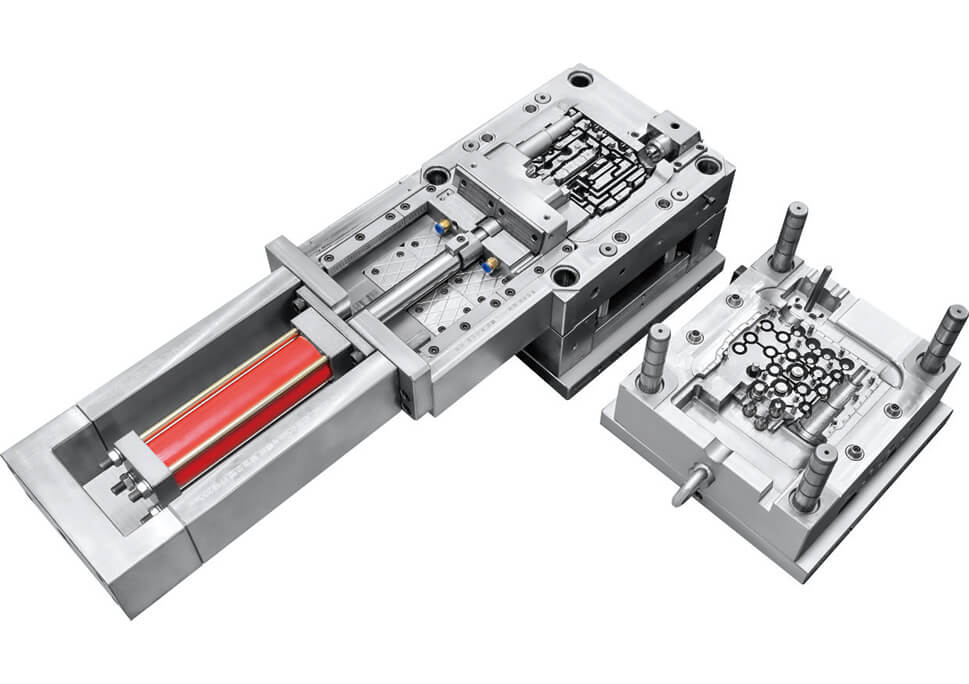
Material selection depends on impact requirements, flexibility, weight, temperature resistance, and manufacturing conditions.
Polypropylene (PP)
PP is widely used for automotive bumper covers because it offers relatively low density, good chemical resistance, and suitable impact performance when properly formulated.
Talc-Filled Polypropylene (PP-TD)
Talc-filled PP is used in selected automotive components where increased stiffness and dimensional stability are required. The filler content must be balanced against impact performance and other design requirements.
Thermoplastic Elastomers (TPE)
TPE materials provide flexibility and elastic recovery. They may be used in selected bumper-related components and flexible protective parts.
PC/ABS Blends
PC/ABS is used in some automotive exterior components where impact resistance and dimensional performance are important, although the specific material choice depends on the application.
Large bumper components present several injection molding challenges.
Warpage and Shrinkage
Large plastic parts may experience uneven shrinkage during cooling. Proper gate placement, cooling channel design, and process parameter control help reduce deformation.
Uneven Material Flow
Long flow paths and complex cavity geometries can create filling difficulties. mold flow analysis can help evaluate gate locations and filling behavior before Tooling is finalized.
Surface Defects
Weld lines, sink marks, flow marks, and air traps may affect bumper appearance. Mold design and injection parameters need to be optimized to control these defects.
Dimensional Consistency
Bumper covers must fit surrounding body panels, lamps, grilles, and mounting structures. Dimensional inspection is therefore important during mold trials and mass production.
For example, a large bumper cover with several mounting points may require careful cooling and pressure control to prevent dimensional changes that affect installation.
Several manufacturing practices help improve bumper molding consistency.
Use mold flow analysis to evaluate filling patterns and potential defects.
Design balanced cooling channels to improve temperature distribution.
Optimize gate locations and runner systems according to part geometry.
Select appropriate injection pressure, speed, and holding pressure.
Verify critical mounting dimensions during mold testing.
Conduct regular mold maintenance to preserve cavity and component quality.
For large bumper molds, mold stiffness, machine clamping capacity, and injection volume should also be considered during equipment selection.
Injection molding is an important manufacturing process for automotive bumper covers, brackets, grille components, and selected energy-absorbing parts. It supports large-scale production of complex plastic components with repeatable dimensions and different surface finishes.
To manufacture reliable bumper parts, manufacturers need to consider material selection, mold structure, material flow, cooling performance, and dimensional inspection. Proper mold design and process control help reduce defects and support consistent automotive component production.
We attach great importance to the customers' demands for product quality and rapid production.
We always believe that meeting the customers' needs is the realization of our value!
Copyright © 2026 YouKing Mould Co., Ltd All rights reserved.| Sitemap| Sitemap
Privacy Policy / Cookie Policy / Terms & Conditions