


 English

Products
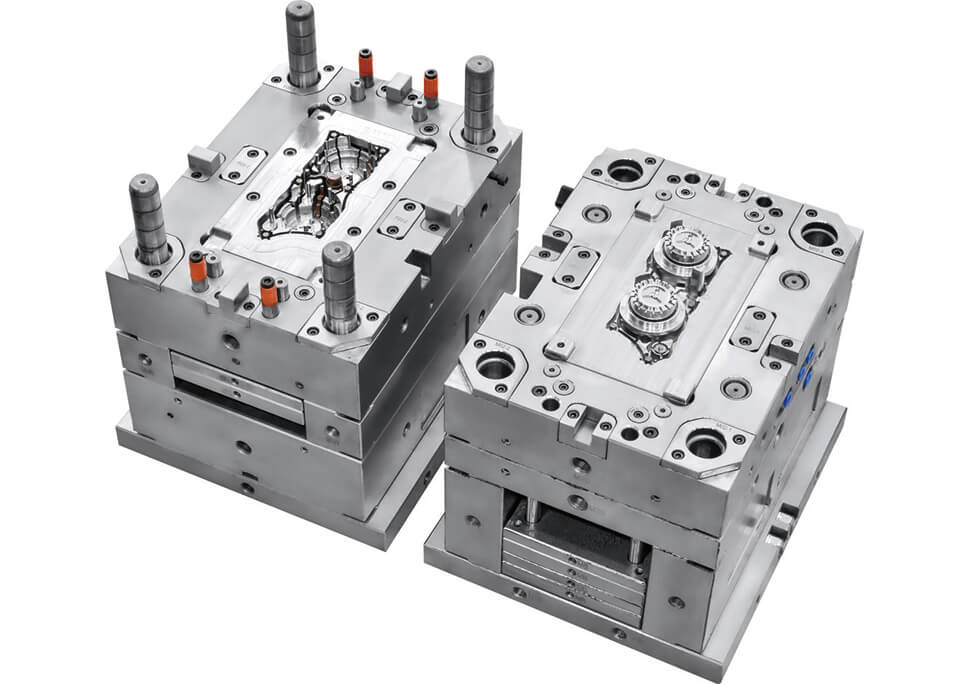
This Valve Block is a precision injection molding part manufactured from Grilon BG-50 S Schwarz, an engineering thermoplastic selected for applications requiring consistent dimensional performance and mechanical properties.
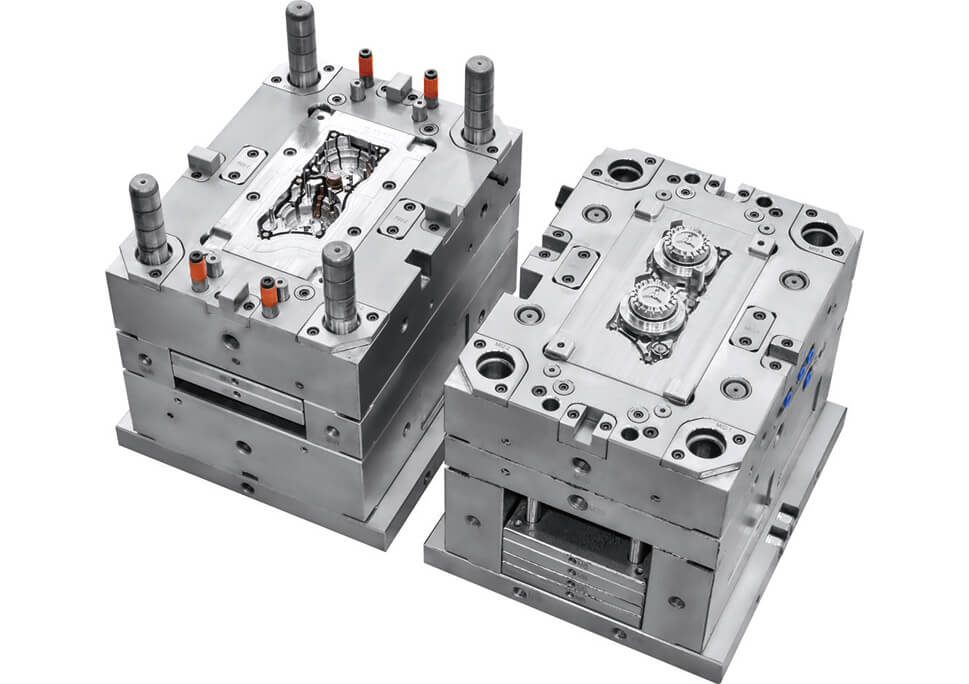
The component is produced using a dedicated plastic injection mold with a single cavity and a Synventive valve gate directly on the part. The mold cavity uses 1.2344 tool steel with a hardness of HRC 50–52, providing a suitable tooling structure for repeatable production.
For precision components such as valve blocks, the injection molding process needs to control more than external appearance. Dimensional accuracy, filling balance, shrinkage, warpage, gate quality, and repeatability are all important factors in achieving stable production.
| Item | Specification |
|---|---|
| Part Name | Valve Block |
| Manufacturing Process | plastic injection molding |
| Cavity Number | 1 Cavity |
| Runner / Gate Type | 1 pc Synventive Valve Gate |
| Gate Position | Directly on the Part |
| Part Material | Grilon BG-50 S Schwarz |
| Cavity Steel | 1.2344 |
| Cavity Hardness | HRC 50–52 |
| Mold Standard | HASCO |
A Valve Block is a component commonly used to integrate fluid passages, connection points, valve interfaces, and other functional structures into a compact component.
Depending on the application, a valve block may be used in hydraulic, pneumatic, fluid-control, automotive, industrial, or other equipment systems.
Compared with a simple plastic housing, a valve block may contain multiple functional features that need to maintain their Designed positions after molding. This makes dimensional control particularly important during precision injection molding.
The final part may need to accommodate other components, seals, connectors, or fluid passages. Consequently, molding defects or dimensional deviations can affect subsequent assembly and functional performance.
Plastic injection molding is suitable for producing complex engineering plastic components in repeatable quantities.
Instead of machining the entire geometry from a solid material, injection molding forms the component directly inside a precision-machined mold cavity. Features such as ribs, bosses, holes, locating structures, and other details can potentially be integrated into the molded component.
For production quantities where repeatability and manufacturing efficiency are important, custom injection molding can provide a practical solution.
The key is to develop the mold and process around the actual material and geometry of the valve block.
The selected material for this Valve Block is Grilon BG-50 S Schwarz.
Engineering plastics such as reinforced polyamide grades can provide different combinations of strength, stiffness, dimensional stability, temperature resistance, and wear performance compared with standard commodity plastics.
However, engineering plastic materials also require appropriate processing control.
Material drying, melt temperature, mold temperature, injection speed, holding pressure, and cooling conditions can influence the final properties and dimensions of the molded component.
For this reason, material specifications should be confirmed before finalizing the injection mold design and molding process.
One of the key features of this tooling design is the use of 1 pc Synventive valve gate directly on the part.
A valve gate is a hot runner gating solution that uses a controlled valve pin to open and close the gate.
Compared with a conventional cold runner system, a direct valve gate can provide greater control over material entry into the cavity while reducing the amount of runner material that would otherwise need to be removed.
For a precision plastic injection part, gate location can influence filling behavior, packing, weld-line formation, surface appearance, and dimensional stability.
The direct gate configuration therefore needs to be considered together with the product geometry and material flow characteristics.
During the injection molding process, molten engineering plastic enters the cavity through the gate and begins filling the designed geometry.
If the flow is poorly balanced, some areas may experience excessive pressure while others may not receive sufficient packing.
For a Valve Block containing multiple functional features, this can potentially affect:
Dimensional accuracy
Part shrinkage
Warpage
Weld-line position
Filling consistency
Surface quality
Cycle stability
The gate location should therefore be determined based on the geometry, material behavior, required filling pattern, and critical dimensions of the component.
The cavity for this Valve Block uses 1.2344 tool steel with HRC 50–52 hardness.
1.2344 is a hot-work tool steel commonly used for injection mold applications where a combination of hardness, toughness, wear resistance, and dimensional stability is required.
For a precision injection mold, the cavity material needs to withstand repeated thermal and mechanical cycles while maintaining the geometry of the molded component.
The specified HRC 50–52 hardness also provides a defined tooling condition that can be considered during machining, polishing, maintenance, and expected mold service.
The actual suitability of any mold steel should always be evaluated according to the material being molded, production volume, cavity geometry, surface requirements, and expected mold life.
This Valve Block uses a 1-cavity injection mold.
A single-cavity configuration can be advantageous when the component requires particularly careful dimensional control or when production requirements do not justify multiple cavities.
With one cavity, the molding process can focus on maintaining a stable filling, packing, cooling, and ejection condition for one part geometry.
For precision injection molding parts, cavity configuration should be determined according to production volume, required output, tooling investment, dimensional requirements, and process stability.
Quality control for a precision Valve Block should begin with the mold rather than only the finished part.
During injection mold manufacturing, critical areas such as cavity dimensions, inserts, parting surfaces, gate position, cooling channels, and ejection components need to be controlled according to the approved design.
During trial molding, the resulting parts can then be evaluated for:
Critical dimensions
Warpage
Shrinkage
Flash
Short shots
Weld lines
Surface defects
Gate condition
Assembly-related dimensions
The molding parameters should be adjusted according to actual trial results rather than relying only on theoretical values.
Engineering plastic components can be sensitive to material shrinkage, cooling conditions, wall-thickness variation, and processing parameters.
For a Valve Block, dimensional stability is especially important where the part contains interfaces or features that must align with other components.
Several factors can influence warpage:
Material: Different grades have different shrinkage characteristics.
Wall Thickness: Large variations can produce uneven cooling and shrinkage.
Gate Location: The filling and packing pattern can influence dimensional variation.
Mold Temperature: Uneven mold temperatures can contribute to differential cooling.
Cooling System: Balanced cooling can help improve dimensional consistency.
Holding Pressure: Appropriate packing helps compensate for material shrinkage before the gate freezes.
Therefore, injection molding quality control should consider these variables together rather than attempting to solve dimensional problems through one machine parameter alone.
A reliable plastic injection mold needs to support the entire molding cycle, including filling, packing, cooling, mold opening, and ejection.
The mold manufacturing process generally involves:
Product and DFM review
Injection mold design
Mold steel preparation
CNC machining
EDM machining where required
Mold component assembly
Mold inspection
Trial injection
Process optimization
Final approval
Mass production
Each stage can influence the final quality of the injection molded component.
For a precision Valve Block, particular attention should be paid to critical dimensions and the interaction between mold geometry, material flow, cooling, and ejection.
A Valve Block is an example of how engineering plastic injection molding can be used to manufacture components with more demanding dimensional and functional requirements.
Unlike simple cosmetic plastic parts, engineering components often require closer coordination between product design, material selection, mold construction, and process control.
The combination of Grilon BG-50 S Schwarz, a 1.2344 HRC 50–52 cavity, 1-cavity mold construction, and a Synventive valve gate directly on the part provides a specific tooling configuration for this Valve Block application.
For customers developing similar custom injection molded parts, the most important consideration is to evaluate the product, material, mold, and production requirements as one integrated system.
This Valve Block demonstrates the importance of precision tooling in plastic injection molding. From the selection of engineering plastic and cavity steel to valve-gate configuration, mold machining, trial injection, and dimensional inspection, every stage can influence the performance and repeatability of the finished part.
For manufacturers developing precision injection molding parts, custom plastic injection molded parts, or other engineering plastic components, a properly engineered mold provides the foundation for stable and repeatable production.