


 English

News
Tue 09 , 2026
Structural automotive parts don't get much attention until something goes wrong — a carrier frame that shifts out of tolerance, or a lining component that doesn't hold its shape under load. Unlike cosmetic trim, these parts exist to keep other components properly positioned and supported for the life of the vehicle, which means the mold behind them has to prioritize dimensional stability over almost everything else.
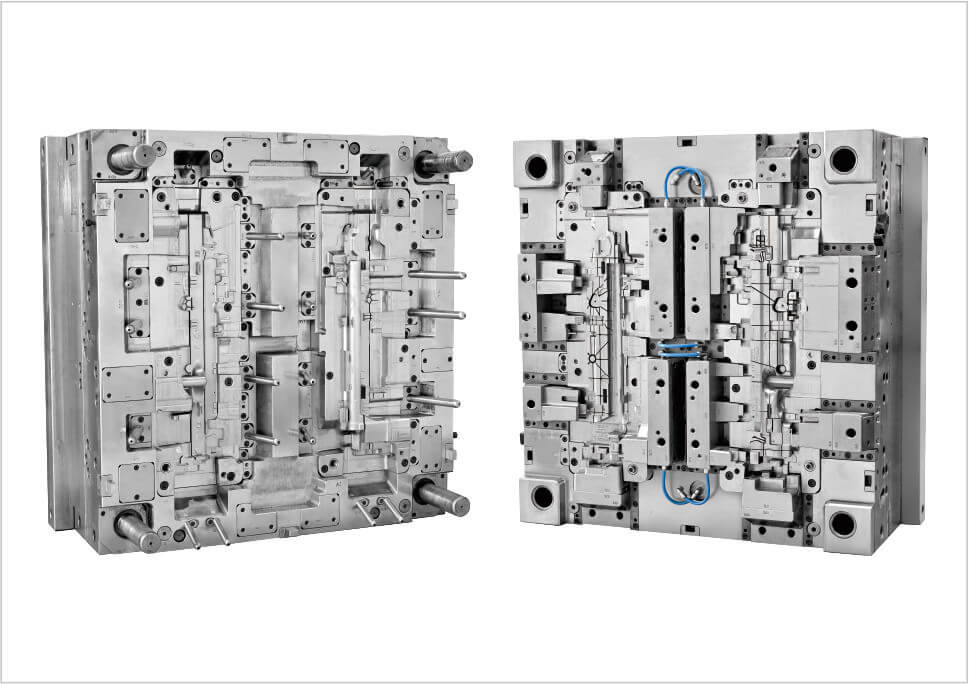
A precision automotive mold for a structural part is judged by a narrow set of criteria: does the part hold its shape under mechanical load, does it maintain mounting-point accuracy across the full production run, and does it resist dimensional drift as Tooling wears over thousands of cycles. Cosmetic surface finish is rarely the priority — mechanical reliability is.
An outer lining component needs to keep a consistent shape and fit across a long production run, which depends on stable tooling as much as good part Design. This is where mold base selection matters — steel from established suppliers such as LKM, BÖHLER, or DAIDO STEEL, paired with standard mold components from HASCO or DME, gives a lining mold the dimensional stability needed to produce consistent parts from the first shot to the last.
Have a structural or lining component to tool? Share your part drawing and target volume for a quote within 24 hours.
A structural support frame holds and positions other automotive components within a larger assembly, so its mounting points need to stay accurate under real operating loads — vibration, temperature swings, and mechanical stress over years of use. This category of automotive parts mold typically uses wear-resistant steel such as H13 to maintain structural integrity, and mounting-point dimensions are verified through CMM measurement rather than a general visual check, since a small deviation at a mounting point can create fit problems throughout the rest of the assembly.
When evaluating a custom injection mold manufacturer for structural or carrier-type parts, a few questions help separate suppliers who understand this category from those who don't:
Which steel grade is specified for the mold, and is the choice based on expected mechanical load and production volume
How are mounting-point and critical structural dimensions verified — CMM inspection against 3D data should be standard
What is the expected mold life, and how is that estimate determined for a structural, high-cycling application
Can the supplier show prior experience with structural or carrier-frame parts for OEM or Tier-1 customers
Structural automotive parts like outer lining components and support frames are judged on dimensional stability and mechanical reliability across the full life of the tool, not cosmetic finish. A custom injection mold manufacturer for this category should be able to show documented steel selection, CMM-based mounting-point verification, and prior structural automotive project experience before being awarded a new program.
Send us your structural component drawing for a free tooling feasibility review.
We attach great importance to the customers' demands for product quality and rapid production.
We always believe that meeting the customers' needs is the realization of our value!