


 English

News
Sat 09 , 2026
A collapsible core is a multi-segment mold core that shrinks inward to release internal threads or undercuts, so the part can be ejected without unscrewing. The core is built from several steel segments held together around a central pin; when the pin is withdrawn, the segments collapse inward and the thread disengages. Collapsible core injection molding is a fast alternative to an unscrewing mold whenever the internal thread is short or can be interrupted.
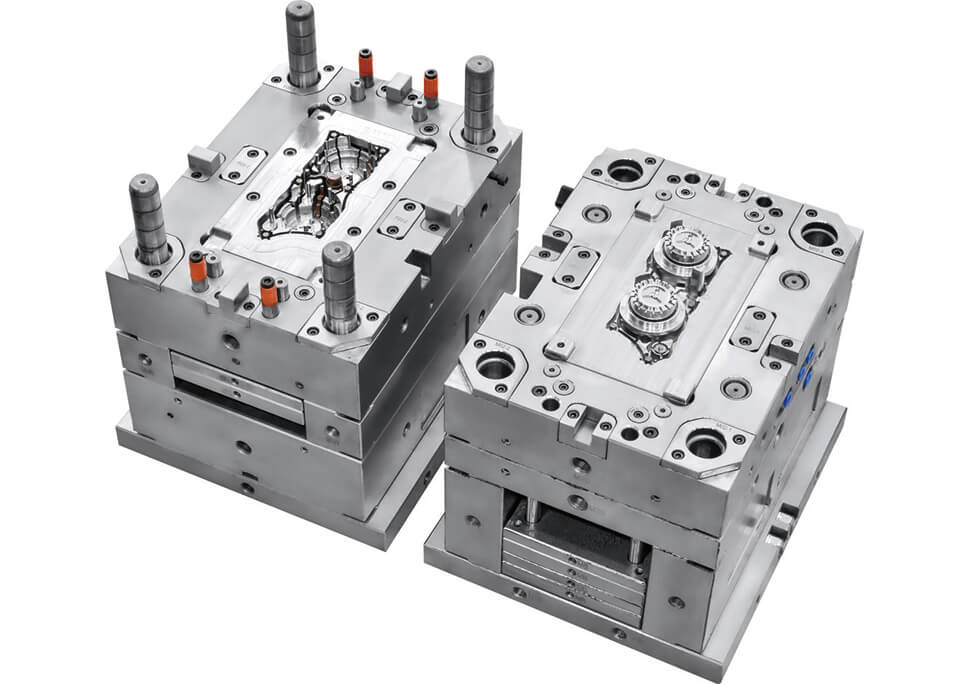
A collapsible core is a core made of separate segments rather than one solid piece. In the molding position the segments sit flush and form a continuous surface that shapes the internal thread or undercut. To release the part, the core is pulled apart from the inside: the segments move inward, the effective diameter of the core drops, and the molded thread is free to slide off. Because the core never rotates, the machine does not need a rotating drive.
This is the key difference from a standard core. A solid core cannot release an internal thread at all, and an unscrewing core releases it by turning. A collapsible core releases it by collapsing — which is why it is also described as a collapsing core or a split core.
Customers and suppliers in the UK and Europe often use the British spelling, collapsible core mould Design, for the same Tool. The segments, the collapse motion, and the molded result are identical.
The working principle rests on the geometry of the segments. Each segment is a wedge that slides on an angled surface. When the central pin or actuator is pulled back, every segment travels inward along its wedge, so the group contracts. The sequence runs like this:
The mold closes and plastic fills the cavity, forming the internal thread around the expanded core.
The part cools until the thread form is stable.
The mold opens and the central pin is retracted.
The core segments collapse inward, reducing the core diameter below the thread root.
The part is ejected straight off the collapsed core.
The segments expand back to molding position for the next shot.
Because there is no rotation, release is quick, and the cycle time is shorter than an unscrewing mold. That speed is the main reason collapsible cores are chosen for high-volume caps and closures. Our mold manufacturing team builds both types and can advise which fits your thread.
Collapsible core design is defined by how many segments are used and how they are actuated. The most common configurations are:
| Design | Segments | Typical use |
|---|---|---|
| Standard collapsible core | 4 to 8 segments | Internal threads on caps and closures |
| Strip-type core | Fewer, stiffer segments | Shallow threads, undercuts |
| Multi-segment precision core | Higher segment count | Tight-tolerance threaded parts |
The segment count controls how smoothly the thread releases. More segments mean a rounder collapsed profile and less stress on the part, but the core becomes more complex to build and maintain. The right number depends on the thread depth and the resin.
A collapsible core mold makes sense when the internal feature is short enough to release by collapsing, and when cycle time matters. Common cases include:
Plastic caps and closures with short or interrupted internal threads
Parts with internal undercuts that cannot be stripped from a solid core
High-volume packaging where the shorter cycle pays back the tooling cost
Components where a slight witness line at the segment split is acceptable
If the thread must be continuous and seal against a mating part, a collapsible core may leave visible split lines at each segment boundary. In that case an unscrewing mold is usually the better choice.
A collapsible core mold lives or dies on its segment geometry. Before the mold is built, these points decide whether the core releases cleanly:
Thread form. Interrupted or rounded threads release far more easily than sharp, deep threads.
Segment split lines. Their position determines where witness marks appear on the part.
Collapse clearance. The core must shrink below the thread root by a set margin, or the part will drag and deform.
Cooling. Segmented cores cool unevenly, so cooling channels are placed to keep the core stable.
Maintenance. Segments wear and need to be replaced; a good design keeps them accessible.
Send us the thread drawing and the annual volume, and we will tell you whether a collapsible core or an unscrewing mold gives you the lower total cost. You can start through our quote request.
Both tools release internal threads, but they trade quality against speed. The table below summarizes the decision.
| Factor | Collapsible core | Unscrewing mold |
|---|---|---|
| Release method | Segments collapse inward | Core rotates out |
| Thread type | Short or interrupted threads | Continuous, full-depth threads |
| Cycle time | Shorter | Longer |
| Surface | Witness lines at splits | Unbroken thread |
As a rule: choose a collapsible core for short threads and speed, and an unscrewing mold for full, sealing threads. We cover the rotating side in depth in our automatic thread removal mold case section.
YouKing Mould has built precision injection molds since 2006, producing 300 to 400 sets a year for customers in Europe, America, and Australia. We design collapsible core and unscrewing molds in-house and run our own injection machines, so every core is trialed and verified before it ships.
Because we also produce molded parts, we judge a core design by how it performs across a full production run, not by a single sample.
Send us your part drawing (2D or 3D), the internal thread specification, and your expected volume. Our engineers will review whether a collapsible core or an unscrewing mold fits best, then return a mold design and quote. Reach us through our inquiry form or contact page, and we will reply within one working day.
We attach great importance to the customers' demands for product quality and rapid production.
We always believe that meeting the customers' needs is the realization of our value!