


 English

News
Thu 11 , 2026

Automotive molds support lightweight vehicle Design by enabling the production of plastic and composite components that can replace certain heavier metal parts. Through injection molding and other molding processes, manufacturers can produce complex automotive components with optimized wall thickness, integrated structures, and material-efficient designs.
As automakers work to improve fuel economy and electric vehicle driving range, reducing vehicle weight has become an important engineering consideration. Automotive molds help make this possible by supporting repeatable manufacturing of lightweight components without compromising essential mechanical and functional requirements.
Automotive molds allow manufacturers to produce lightweight plastic components in different shapes and sizes.
Replacing Selected Metal Components
Certain interior panels, covers, brackets, and housings can be manufactured from engineering plastics instead of metal when the mechanical and operating requirements permit.
For example, a plastic electronic control unit housing may weigh less than an equivalent metal enclosure while still providing the required protection and dimensional stability.
Optimizing Wall Thickness
injection mold design allows engineers to control wall thickness and incorporate ribs, bosses, and structural features. These features can provide the required stiffness while limiting unnecessary material use.
Integrating Multiple Components
Some plastic components can combine several functions into one molded part. This may reduce the number of separate components, fasteners, and assembly operations.
Producing Complex Geometries
Injection molding supports shapes that may be difficult or expensive to manufacture using traditional metalworking processes. This gives engineers more flexibility when developing lightweight structures.
Many vehicle components can benefit from plastic and composite molding technologies.
Interior Components
Dashboard panels, door trims, center consoles, seat covers, and decorative interior components are commonly manufactured using injection molding.
Exterior Components
Bumper covers, radiator grilles, mirror housings, and selected exterior trim components can be produced using lightweight plastic materials.
Electrical and Electronic Housings
Battery management system housings, connector enclosures, sensor covers, and electronic control unit components may use engineering plastics according to their thermal, electrical, and mechanical requirements.
Under-the-Hood Components
Selected air intake ducts, fluid reservoirs, protective covers, and other engine compartment components can be manufactured using heat-resistant engineering plastics.
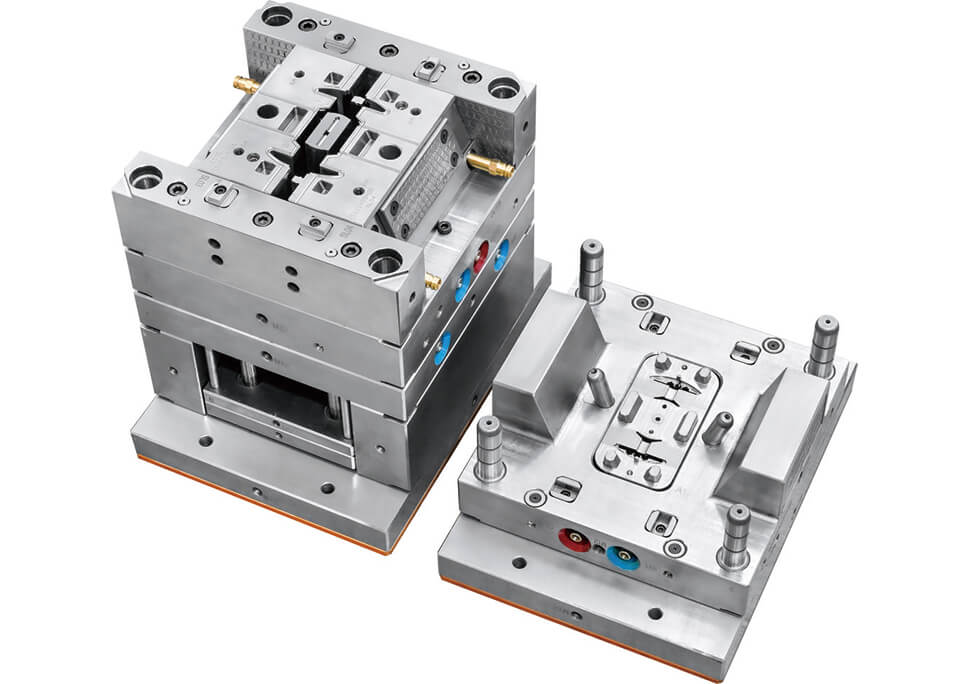
Different materials offer different balances of weight, strength, stiffness, and thermal performance.
Polypropylene (PP)
PP is widely used in automotive interior and exterior components because of its relatively low density, chemical resistance, and processing flexibility.
Acrylonitrile Butadiene Styrene (ABS)
ABS is commonly used for interior panels, trim components, and electronic housings where impact resistance and surface appearance are important.
Polyamide (PA)
PA is used for selected structural and under-the-hood components because of its mechanical strength and wear resistance. Glass-fiber reinforcement can improve stiffness and strength, although it also increases material density and may affect impact behavior.
Polycarbonate (PC)
PC offers high impact resistance and is used in selected lighting, electronic, and protective components.
Fiber-Reinforced Thermoplastics
Glass-fiber-reinforced and other fiber-reinforced polymers can provide improved stiffness and strength compared with unreinforced plastics. These materials are useful for applications where lightweight construction and mechanical performance must be balanced.
Mold design has a direct influence on the weight, structural performance, and dimensional quality of plastic automotive components.
Wall Thickness Optimization
Uniform and appropriately optimized wall thickness can help reduce material consumption and minimize uneven shrinkage.
Rib and Boss Design
Ribs and bosses provide structural support around mounting points and loaded areas. Their dimensions and placement should be carefully designed to avoid sink marks and stress concentration.
Gate Positioning
Gate location affects material flow, weld line positions, and packing behavior. Proper positioning helps achieve consistent filling and part quality.
Cooling System Design
Balanced cooling helps control shrinkage and warpage, especially in large automotive plastic parts with varying wall thicknesses.
For example, an automotive door trim panel can incorporate ribs on its rear surface to improve stiffness without requiring a uniformly thick plastic structure.
Lightweight design requires more than simply replacing metal with plastic. Manufacturers must ensure that the finished component meets its functional requirements.
Mechanical Strength: Plastic parts must withstand the loads and stresses expected during vehicle operation.
Temperature Resistance: Under-the-hood components may require materials that maintain their properties at elevated temperatures.
Dimensional Stability: Thermal expansion and moisture absorption can affect component dimensions.
Impact Performance: Exterior and structural parts may need to meet specific impact requirements.
Long-Term Durability: UV exposure, chemicals, vibration, and aging should be considered during material selection.
In addition, some components require flame-retardant, electrical insulation, or other specialized properties.
Vehicle weight is particularly important in electric vehicle design because it influences energy consumption and driving range.
Lightweight molded components can help reduce the mass of interior structures, electronic housings, cooling system components, and selected exterior parts.
For example, replacing a suitable metal interior bracket with a properly engineered reinforced plastic component may reduce component weight while maintaining the required stiffness.
However, the overall effect on driving range depends on the total weight reduction, vehicle architecture, battery capacity, aerodynamics, and driving conditions. Lightweight molding is one part of a broader vehicle engineering strategy.
Automotive molds support lightweight vehicle design by enabling the production of plastic and fiber-reinforced components with optimized structures and integrated functions. From interior trim and exterior panels to electrical housings and under-the-hood components, molding technologies provide manufacturers with additional options for reducing component weight.
Successful lightweight automotive manufacturing requires careful coordination between material selection, component engineering, mold design, and production process control. The objective is not simply to use less material, but to achieve the required strength, durability, and dimensional performance with an efficient component structure.
We attach great importance to the customers' demands for product quality and rapid production.
We always believe that meeting the customers' needs is the realization of our value!
Copyright © 2026 YouKing Mould Co., Ltd All rights reserved.| Sitemap| Sitemap
Privacy Policy / Cookie Policy / Terms & Conditions