


 English

News

Fri 11 , 2026

Flash is a common defect in plastic injection molding. It occurs when molten plastic escapes from the mold cavity through parting lines, ejector pin clearances, or other small gaps and solidifies as thin unwanted material on the finished component.
In automotive plastic injection molding, flash can affect dimensional accuracy, appearance, assembly performance, and production consistency. Understanding its causes helps manufacturers reduce defects and maintain reliable component quality.
Flash is a thin layer or excess edge of plastic that forms outside the intended part geometry.
It commonly appears around:
Mold parting lines
Ejector pin locations
Slide and lifter interfaces
Inserts and core connections
Venting areas
For automotive components, flash may be particularly problematic when parts need to fit tightly with other assemblies.
For example, flash around an automotive connector housing may interfere with terminal installation or affect the fit between mating components. On visible interior parts, it may also create an unacceptable surface appearance.
Several factors can cause molten plastic to escape from the mold cavity.
When injection pressure is too high, the force exerted by molten plastic may exceed the mold's ability to maintain a tight seal.
This can cause material to enter small gaps along the parting surface.
Injection pressure should be adjusted according to material viscosity, component geometry, gate design, and mold condition.
The clamping system must keep the mold halves securely closed during injection and packing.
If the clamping force is insufficient, the mold may separate slightly under cavity pressure, allowing plastic to escape.
The required clamping force depends on projected part area, cavity pressure, mold configuration, and machine capacity.
Repeated production can cause wear on parting surfaces, slides, and other mold components.
Scratches, deformation, poor fitting surfaces, or damaged shut-off areas can create gaps where molten plastic can enter.
Regular mold inspection and maintenance are important for preventing flash caused by tooling deterioration.
Higher melt temperatures can reduce plastic viscosity and make the material flow more easily into small mold clearances.
If temperature settings are unsuitable for the selected resin, the risk of flash may increase, particularly when combined with excessive injection pressure or inadequate clamping.
Mold vents allow trapped air and gases to escape during filling.
However, if vent dimensions are unsuitable, vent surfaces become worn, or venting areas are damaged, molten plastic may enter these openings and form flash.
Proper vent design must balance gas evacuation with material retention.
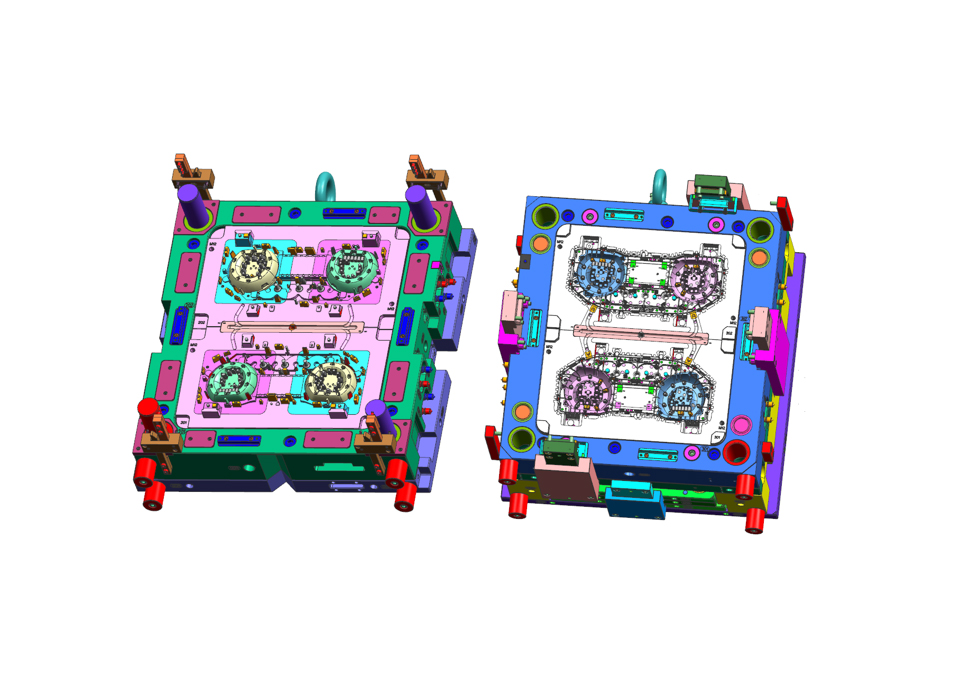
Flash prevention requires a combination of process adjustment, mold maintenance, and equipment evaluation.
Optimize injection pressure and speed: Injection parameters should be adjusted to achieve complete cavity filling without excessive pressure.
Check clamping force: Confirm that the injection molding machine provides sufficient clamping capacity for the mold and component.
Maintain mold parting surfaces: Inspect parting lines, slides, inserts, and shut-off areas for wear, contamination, or damage.
Control melt temperature: Follow the resin supplier's processing recommendations and maintain stable temperature conditions.
Improve mold venting: Ensure that venting channels allow trapped air to escape without creating excessive material leakage.
Inspect material condition: Moisture, contamination, and inconsistent material properties can affect processing behavior and should be controlled according to resin requirements.
The impact of flash depends on the location, size, and function of the component.
| Impact Area | Possible Consequence |
|---|---|
| Dimensional accuracy | Parts may exceed specified dimensions |
| Assembly | Excess material may interfere with fitting or fastening |
| Appearance | Visible edges may look uneven or poorly finished |
| Sealing | Flash may affect contact surfaces and sealing interfaces |
| Electrical function | Excess plastic may interfere with connector assembly |
| Production cost | Additional trimming, inspection, and rework may be required |
Not all flash has the same level of severity. Manufacturers should define acceptable limits according to engineering drawings, functional requirements, and automotive quality standards.
Flash can be detected through visual inspection, dimensional measurement, and automated inspection systems.
For components with critical fitting surfaces, manufacturers may use gauges or coordinate measuring machines to verify dimensions.
Production teams can also monitor process parameters such as injection pressure, clamping force, melt temperature, and cycle consistency.
When flash appears repeatedly in the same location, manufacturers should investigate the corresponding mold area rather than relying only on manual trimming.
Flash defects in automotive plastic injection molding are commonly caused by excessive injection pressure, insufficient clamping force, mold wear, unsuitable melt temperature, and improper venting.
Preventing flash requires stable processing conditions, accurate mold design, regular tooling maintenance, and appropriate inspection procedures. Addressing the root cause helps reduce rework and supports consistent automotive component quality.
We attach great importance to the customers' demands for product quality and rapid production.
We always believe that meeting the customers' needs is the realization of our value!
Copyright © 2026 YouKing Mould Co., Ltd All rights reserved.| Sitemap| Sitemap
Privacy Policy / Cookie Policy / Terms & Conditions