


 English

News
Fri 11 , 2026

Gas-assisted injection molding is a specialized plastic molding process that uses pressurized gas, usually nitrogen, to form hollow sections or internal channels within molded components.
In automotive manufacturing, this process is used for selected large, thick, or structurally complex plastic parts. It can reduce material consumption, improve dimensional stability, and help produce components with a combination of lightweight construction and structural rigidity.
Gas-assisted injection molding is a variation of conventional injection molding. During the process, molten plastic is injected into a mold cavity, and pressurized gas is introduced into selected areas of the material.
The gas pushes the molten plastic outward toward the mold walls, creating a hollow section inside the component. The plastic then cools and solidifies around the cavity.
Nitrogen is commonly used because it is relatively inert under typical processing conditions and is suitable for forming internal gas channels.
There are two common approaches:
Short-shot gas-assisted molding: The mold cavity is partially filled with plastic before gas is introduced to complete the filling process.
Full-shot gas-assisted molding: The cavity is initially filled with plastic, and gas is then injected to displace molten material from selected internal areas.
The appropriate method depends on component geometry, material behavior, and the required hollow structure.
One of the main advantages of gas-assisted injection molding is its ability to create hollow sections in plastic components.
By reducing the amount of plastic used in selected areas, manufacturers can lower component weight without necessarily sacrificing the required structural performance.
This is useful in automotive applications where reducing vehicle mass is an important design consideration.
Thick plastic sections are more likely to experience sink marks and internal shrinkage during cooling.
Gas-assisted molding can reduce the amount of solid plastic in these areas and help maintain more uniform wall structures.
When properly designed, this can reduce visible sink marks and improve dimensional consistency.
Gas channels can be designed through selected sections of a component to create hollow structural features.
These features may improve stiffness relative to the material used, depending on the component geometry and loading conditions.
For example, gas-assisted molding can be considered for selected automotive handles, structural covers, and support components.
Because the process creates hollow sections, it may use less plastic than a conventional solid-part design.
This can reduce raw material consumption and may also influence cycle time, depending on the component structure and cooling requirements.
The actual savings depend on the original design, gas channel layout, resin, and processing conditions.
Gas-assisted injection molding allows manufacturers to create internal channels and complex hollow structures that may be difficult to achieve with conventional solid molding.
This can support the integration of structural features and reduce the need for separate components in suitable applications.
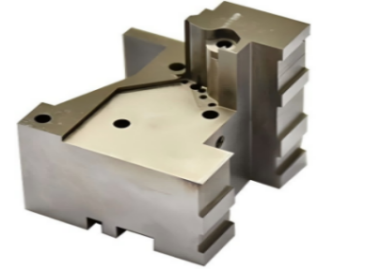
The process is particularly suitable for parts with thick sections, elongated geometries, or specific structural requirements.
Typical applications include:
Automotive door handles: Hollow internal sections can reduce material usage while maintaining the required shape and stiffness.
Instrument panel components: Selected structural sections and supports may benefit from reduced sink marks and lower weight.
Automotive interior handles: Gas-assisted molding can produce hollow structures in suitable grab handles and support components.
Structural covers and housings: Certain thick-walled covers and housings may use gas channels to improve dimensional stability.
Automotive brackets: Selected plastic brackets can be designed with hollow sections to balance weight and mechanical performance.
Not every automotive plastic part is suitable for this process. Thin-walled components or parts with highly complex internal geometries may be better suited to conventional injection molding or other manufacturing methods.
Material selection depends on the component's mechanical requirements, operating environment, and process design.
Commonly considered materials include:
Polypropylene (PP): Used in various automotive interior and structural components.
Acrylonitrile Butadiene Styrene (ABS): Suitable for selected interior components requiring dimensional and surface quality.
Polyamide (PA): Used where higher mechanical strength and temperature resistance are required, depending on the grade.
Polycarbonate (PC): Considered for applications requiring impact resistance and dimensional performance.
PC/ABS blends: Used in selected automotive components requiring a balance of properties.
The material's melt flow behavior, stiffness, shrinkage characteristics, and compatibility with gas-assisted processing should be evaluated before production.
Although gas-assisted injection molding offers several advantages, successful production requires careful engineering.
Gas channel design: The location and shape of gas channels influence material distribution, wall thickness, and structural performance.
Gas pressure and timing: Gas injection pressure, delay time, and duration must be controlled to achieve consistent hollow sections.
mold design: Specialized gas injection points, sealing structures, and suitable venting may be required.
Material selection: The resin must provide suitable flow characteristics and mechanical properties.
Product validation: Manufacturers should evaluate dimensional accuracy, wall thickness, internal gas channel formation, and mechanical performance.
Gas-assisted molding also requires specialized equipment and process controls. Its economic value should be assessed against tooling costs, production volume, and the potential reduction in material and secondary operations.
Gas-assisted injection molding offers automotive manufacturers a way to produce selected plastic components with hollow structures, reduced material consumption, improved dimensional stability, and design flexibility.
It is particularly useful for thick-walled and structurally complex components such as handles, covers, and selected brackets. However, the benefits depend on proper gas channel design, material selection, mold engineering, and process control.
For automotive plastic component manufacturers, evaluating the part geometry and performance requirements is essential before choosing gas-assisted injection molding over conventional methods.
We attach great importance to the customers' demands for product quality and rapid production.
We always believe that meeting the customers' needs is the realization of our value!
Copyright © 2026 YouKing Mould Co., Ltd All rights reserved.| Sitemap| Sitemap
Privacy Policy / Cookie Policy / Terms & Conditions