


 English

Products
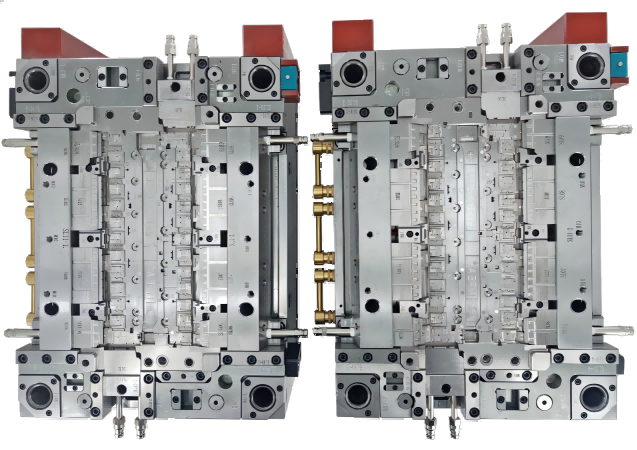
This precision automotive injection mold was developed for the Audi BEV 4P Holder Busbar component. The tooling is Designed around PA66-GF30 engineering plastic and uses a 1-cavity configuration with a 4-point YUDO valve gate hot runner system.
For automotive plastic components with glass-fiber-reinforced materials, mold design requires careful consideration of material flow, cavity filling, dimensional control, and mold wear. This project combines 1.2343 ESR tool steel with a specified hardness of HRC 50–52 and a HASCO-standard mold structure.
The Audi BEV 4P Holder Busbar is a molded plastic component associated with an Audi BEV platform. Based on its name and project specification, the part is designed as a holder or support component for a busbar-related assembly.
The holder needs to maintain the required geometry and dimensional consistency so that it can work correctly with its corresponding components during assembly. The actual electrical function and final vehicle system application depend on the customer's product design and assembly specification.
The part material specified for this project is PA66-GF30, a glass-fiber-reinforced polyamide commonly used for demanding engineered plastic components.
High Mechanical Strength: Glass fiber reinforcement improves the mechanical performance of the molded material.
Improved Dimensional Stability: Reinforcement can help control dimensional changes compared with unfilled nylon.
Engineering Plastic Performance: PA66-GF30 is suitable for applications requiring stronger molded plastic components.
Mold Wear Consideration: Glass fibers can increase tool wear, making suitable mold steel and surface condition important.
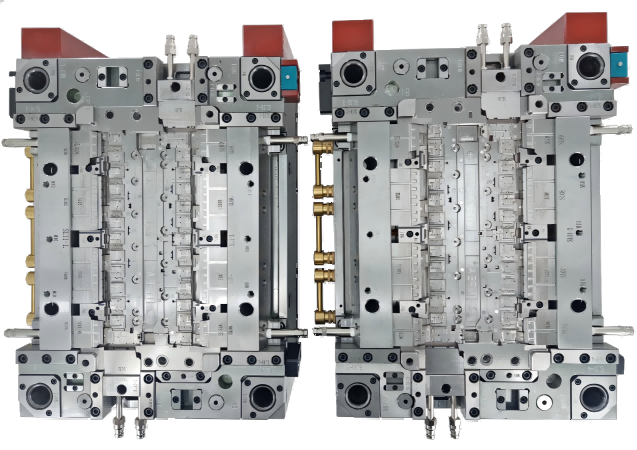
This tooling uses a 1-cavity injection mold. A single-cavity configuration allows the mold to focus on dimensional accuracy, filling behavior, cooling, and ejection of the individual component.
For precision automotive components, the cavity must reproduce the required geometry consistently throughout repeated molding cycles. Mold design therefore needs to consider parting-line position, gate location, cooling layout, draft, ejection, and material shrinkage.
The mold uses 4 pcs YUDO valve gates with a hot runner system. The gates are specified as direct injection points on the molded part.
A multi-point valve gate arrangement allows the injection strategy to be matched to the part geometry. For precision molded components, gate positioning can influence filling behavior, weld-line location, pressure distribution, and surface quality.
Multiple Injection Points: Four valve gates provide controlled material entry into the cavity.
Flow Control: Valve gate timing can be coordinated with the molding process.
Direct Gating: The specified gates inject directly onto the part.
Production Consistency: A properly designed hot runner system supports repeatable molding conditions.
The cavity steel for this mold is 1.2343 ESR with a specified hardness of HRC 50–52. Mold steel selection is particularly important when processing glass-fiber-reinforced engineering plastics because the reinforcement can contribute to abrasive wear during repeated molding cycles.
The ESR steel specification provides a suitable precision-tooling material for the cavity, while the specified hardness provides the required working condition for the mold components.
Producing a precision plastic component from PA66-GF30 requires more than simply machining the cavity. Several factors need to be considered throughout mold development.
Material Flow Analysis: The filling pattern should be evaluated according to the part geometry and gate locations.
Gate Position: Direct valve gates need to be positioned according to filling requirements and visible-part considerations.
Cooling Control: Balanced cooling helps maintain dimensional consistency during production.
Wear Resistance: Glass-fiber-reinforced material requires appropriate consideration of cavity and core wear.
Ejection: Ejection points should provide sufficient and balanced force without damaging the molded component.
Dimensional Inspection: Critical dimensions should be verified during mold trials and final validation.
A precision plastic injection mold normally requires several stages of engineering and validation before production release. For this type of automotive tooling, the process can include mold design, steel preparation, CNC machining, EDM machining, mold assembly, trial molding, dimensional inspection, and final adjustments.
During mold trials, the molding condition can be evaluated through part appearance, dimensions, filling behavior, gate performance, and ejection. Any necessary tooling adjustments can then be made before production validation.
DFM Review: Review part geometry and moldability before machining.
Steel Verification: Verify cavity steel specification and hardness.
CNC Machining Inspection: Check critical machined dimensions and tolerances.
EDM Inspection: Control EDM features and electrode accuracy where required.
Mold Trial: Evaluate filling, molding conditions, and part quality during trial production.
Dimensional Inspection: Measure critical part dimensions against the approved specifications.
| Item | Specification |
|---|---|
| Part Name | Audi BEV 4P Holder Busbar |
| Mold Type | Automotive Plastic Injection Mold |
| Cavity Number | 1 |
| Runner Type | 4 pcs YUDO Valve Gate Hot Runner |
| Gating Type | Direct Injection on Part |
| Part Material | PA66-GF30 |
| Cavity Steel | 1.2343 ESR |
| Steel Hardness | HRC 50–52 |
| Mold Standard | HASCO |
This tooling is specifically associated with the Audi BEV 4P Holder Busbar project. More broadly, similar precision automotive injection molds can be used to manufacture engineering plastic holders, supports, brackets, connectors, and other molded components used in automotive assemblies.
The exact application of each component should be determined from the customer's approved part drawings, specifications, and vehicle-system requirements.
It is the specified molded plastic component for this Audi BEV project. Based on the part name, it functions as a holder or support component associated with a busbar assembly.
The specified material is PA66-GF30, a glass-fiber-reinforced polyamide used for engineered plastic components.
The mold has 1 cavity.
The mold uses 4 pcs YUDO valve gate hot runner, with direct injection onto the part.
The cavity steel is 1.2343 ESR with a specified hardness of HRC 50–52.
PA66-GF30 contains glass fiber reinforcement, which can increase abrasive wear during repeated molding. Appropriate cavity steel, hardness, machining quality, and maintenance are therefore important for tooling performance.
Yes. The project specification identifies HASCO as the mold standard.
This Audi BEV project demonstrates the combination of precision cavity machining, glass-fiber-reinforced material processing, multi-point valve gating, and controlled mold validation required for demanding automotive plastic components.