


 English

Products
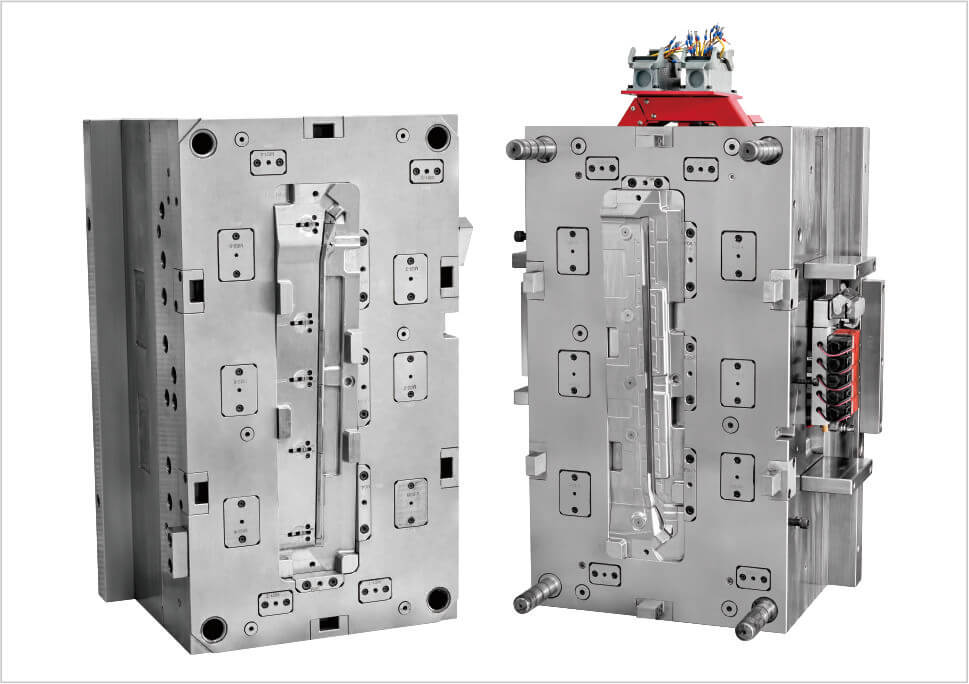
The ZB_BLENDE_FPD (BMW G6X) is a precision automotive injection mold developed for an interior plastic component used in the BMW G6X platform. Designed for PC-ABS injection molding, the mold focuses on dimensional consistency, controlled material flow, surface quality, and stable production performance.
The ZB_BLENDE_FPD is designed for an automotive interior application where both dimensional accuracy and appearance quality are important. Interior plastic components need to fit accurately with surrounding parts while maintaining a consistent visual surface after molding.
PC-ABS is an engineering thermoplastic commonly used for automotive interior applications where a combination of mechanical performance, dimensional stability, impact resistance, and appearance is required.
The original tooling concept used 5 pcs Synventive valve gates and was subsequently changed to a cold runner with sub gate configuration. The gating system directly affects material flow, pressure distribution, weld-line position, packing, and gate appearance.
Gate position is an important part of injection mold design. It determines the initial flow direction of molten PC-ABS and can influence filling behavior, weld lines, surface appearance, packing, and part deformation.
Material Flow: The plastic needs to fill the cavity in a controlled manner.
Weld Lines: Flow fronts may meet at specific locations.
Surface Appearance: Gate position can influence visible surfaces.
Packing: The gate needs to provide an effective packing path.
Part Deformation: Uneven filling and cooling can cause dimensional variation.
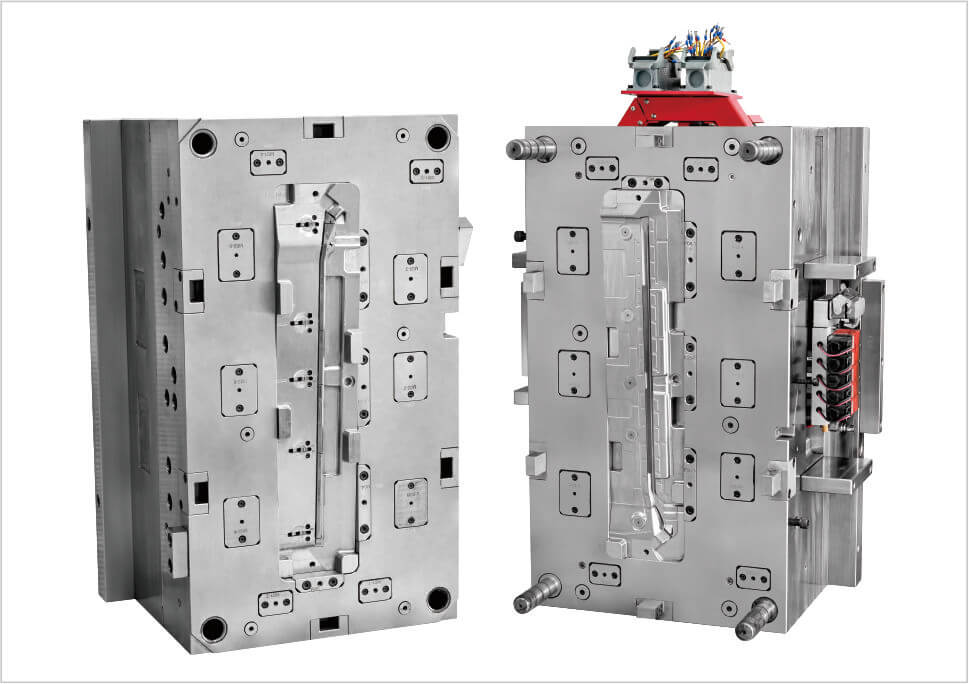
This tooling uses a 1-cavity injection mold. A single-cavity configuration produces one component during each molding cycle and allows the tooling to focus on the filling, packing, cooling, and ejection requirements of one specific product geometry.
The cavity is manufactured from 1.2738HH steel with HRC 33–38 hardness. Cavity steel selection is an important consideration in automotive injection mold manufacturing because the mold needs to maintain its geometry through repeated injection cycles.
Manufacturing a precision plastic injection mold involves multiple stages, with each stage contributing to tooling accuracy and production stability.
Product and DFM Review
Injection Mold Design
Steel Preparation
CNC Machining
EDM and Detail Machining
Mold Assembly
Mold Inspection
Trial Molding
Process Optimization
Trial molding allows engineers to evaluate the completed mold with the actual PC-ABS material and injection molding machine. Filling behavior, gate condition, critical dimensions, warpage, flash, weld lines, surface appearance, and assembly fit can all be evaluated during this stage.
Injection molding quality control for automotive interior components needs to address both appearance and dimensional performance.
Flow marks
Weld lines
Flash
Sink marks
Burn marks
Gate marks
Surface inconsistencies
Critical dimensional deviations
The ZB_BLENDE_FPD mold demonstrates how an automotive injection mold can be developed around a specific material, product geometry, gating concept, and production requirement. The combination of PC-ABS material, single-cavity construction, cold runner with sub gate, 1.2738HH HRC 33–38 cavity steel, and HASCO standards provides a tooling configuration focused on consistent production.
Youking Mould develops and manufactures custom automotive injection molds for interior trim, functional plastic components, and other OEM automotive applications. From DFM and mold design to tooling manufacturing, trial molding, and production optimization, each project is developed according to the specific requirements of the molded component.