


 English

Products
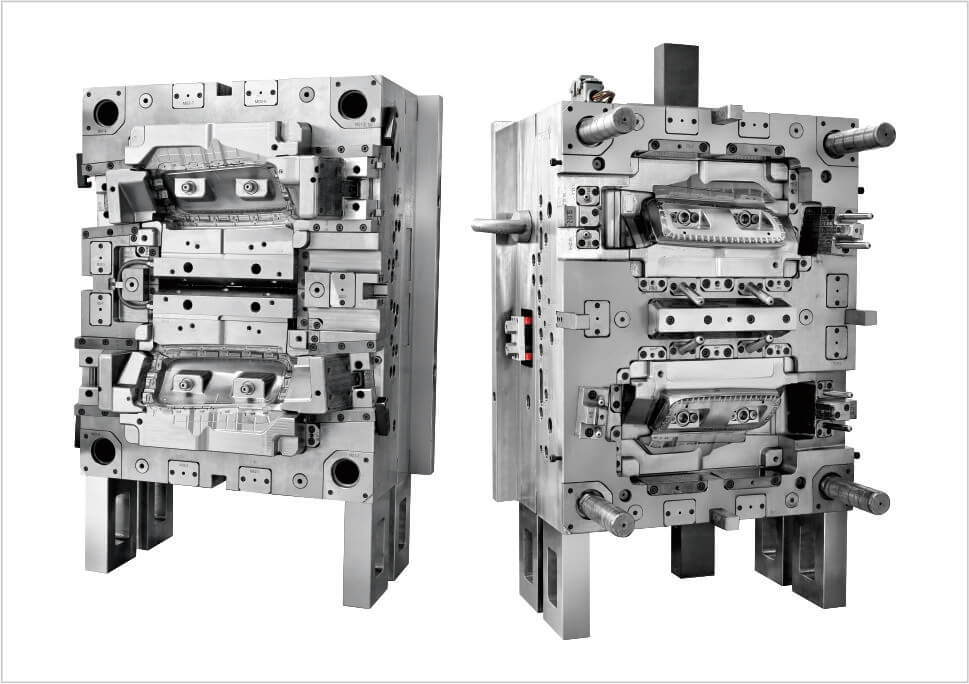
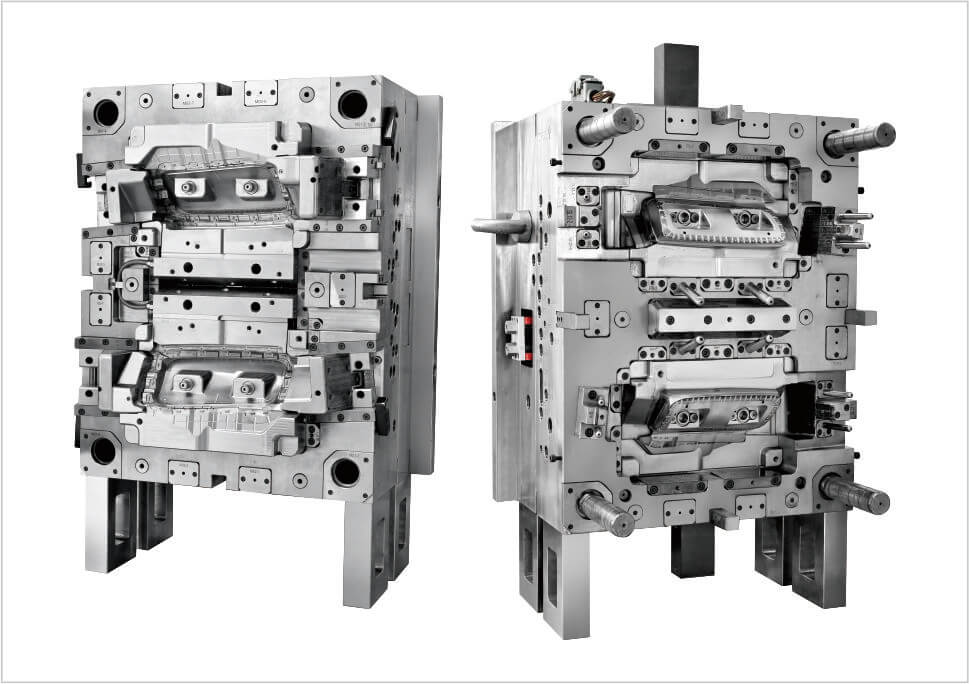
The RAHMEN HUD (BMW G6X) is a precision automotive interior plastic component associated with the vehicle's Head-Up Display (HUD) system. The term “Rahmen” means “frame,” so this component can be understood as a HUD frame or HUD trim frame used around the head-up display assembly.
Manufactured from PC-ABS through a controlled plastic injection molding process, the component is Designed for the BMW G6X platform. Its tooling uses a 2-cavity configuration and one Synventive valve gate directly on the part, with the cavity manufactured from 1.2738HH steel at HRC 33–38 according to the HASCO mold standard.
RAHMEN HUD is an automotive interior frame-type component used in connection with a vehicle's Head-Up Display system. It is not the electronic HUD projection unit itself. Instead, the molded plastic frame functions as a surrounding structural or trim element that interfaces with the HUD assembly and the surrounding interior structure.
The component belongs to the category of automotive interior injection molding parts. Depending on the exact vehicle architecture, the frame may incorporate mounting, locating, supporting, or visual finishing features around the display opening.
The HUD frame is used in the front interior area of the vehicle, around the head-up display system. The HUD itself projects selected driving information into the driver's field of view, while the frame provides a defined physical interface around the display area.
Because the component is installed in the vehicle interior, both dimensional accuracy and visible surface quality can be important. The frame must maintain the required position relative to surrounding dashboard or instrument-panel structures while meeting the expected appearance standard.
According to the tooling project specification, this component is developed for the BMW G6X platform.
The available project information identifies the platform as BMW G6X but does not specify the exact vehicle derivative. Therefore, the component is best described as a BMW G6X HUD-related automotive interior component unless the OEM drawing or project documentation provides a more specific vehicle model.
The tooling configuration for this RAHMEN HUD project is summarized below.
| Item | Specification |
|---|---|
| Part Name | RAHMEN HUD (BMW G6X) |
| Part Type | Automotive HUD Frame / Interior Plastic Component |
| Part Material | PC-ABS |
| Cavity Number | 2 |
| Runner Type | 1 pc Synventive Valve Gate Directly on the Part |
| Cavity Steel | 1.2738HH |
| Cavity Steel Hardness | HRC 33–38 |
| Mold Standard | HASCO |
PC-ABS is an engineering thermoplastic widely used in applications where a combination of mechanical performance, impact resistance, dimensional stability, and appearance is required.
For automotive interior parts, the material has to work together with the mold and injection molding process. Melt temperature, mold temperature, injection speed, holding pressure, cooling, and ejection conditions can all influence the final dimensions and appearance.
For a HUD frame, this is particularly relevant around mounting points, locating features, openings, and mating surfaces that need to remain stable after molding.
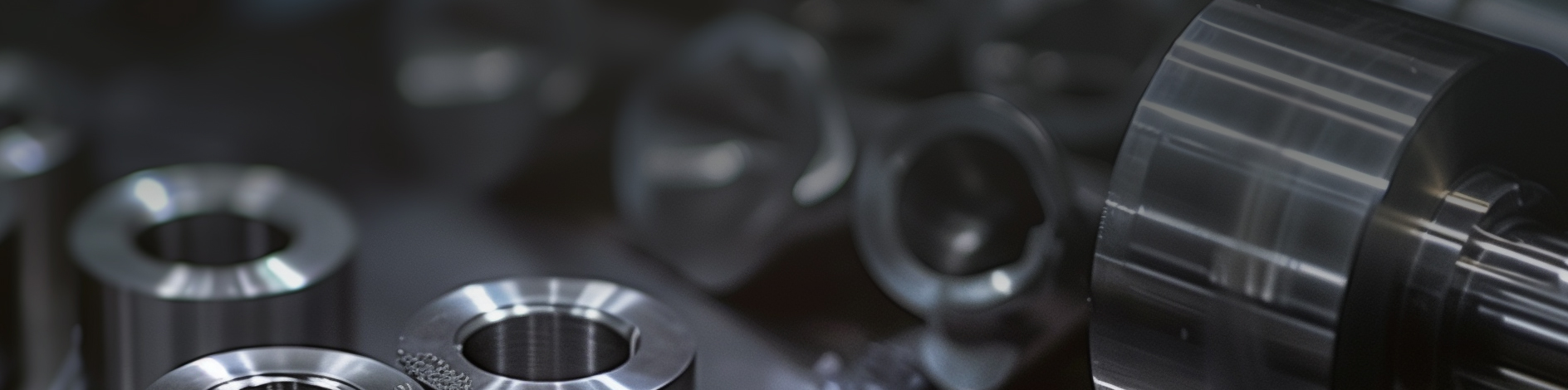
The mold uses 1 pc Synventive valve gate directly on the part. A direct valve-gate configuration allows molten PC-ABS to enter the cavity through a controlled gate positioned on the molded component.
In precision injection molding, gate location has a direct relationship with material flow, packing, weld-line position, surface quality, and dimensional stability.
When a valve gate is placed directly on the part, its position must be evaluated against the product geometry and appearance requirements. The gate location should provide an appropriate flow pattern while minimizing unwanted influence on important functional or visible surfaces.
The mold uses 2 cavities, allowing two components to be produced during one injection cycle.
For automotive injection molding, cavity count should be selected according to production volume, tooling investment, cycle requirements, dimensional control, and process stability rather than simply maximizing output.
With a two-cavity configuration, trial molding can also compare the two cavities for part weight, dimensions, appearance, filling behavior, and assembly-related features. This helps identify cavity-to-cavity variations during mold validation.
The cavity is manufactured from 1.2738HH steel with HRC 33–38 hardness.
In automotive injection mold manufacturing, cavity steel needs to maintain the required mold geometry through repeated injection, cooling, mold opening, and ejection cycles.
For interior components with defined assembly and appearance requirements, cavity machining accuracy and surface preparation are also important because the mold directly reproduces the geometry and surface characteristics of the finished plastic part.
A HUD frame may contain mounting structures, locating features, thin sections, and surfaces that interface with surrounding interior components. These features need to be considered together during injection mold design.
Wall Thickness: Sudden changes can increase shrinkage and warpage risk.
Draft Angles: Appropriate draft supports reliable demolding.
Gate Location: The direct valve gate influences filling and packing behavior.
Cooling: Balanced cooling supports dimensional stability.
Ejection: Ejector positions should minimize deformation during demolding.
Parting Line: The parting-line position should support both mold manufacturability and part appearance.
A precision plastic injection mold is developed through a series of controlled manufacturing stages.
Product and DFM Review: Evaluate product geometry and injection molding feasibility.
Injection Mold Design: Define the cavity, core, gate, cooling, and ejection systems.
Steel Preparation: Prepare the specified 1.2738HH cavity steel.
CNC Machining: Machine the main cavity and core geometry.
EDM and Detail Machining: Process features requiring additional machining accuracy.
Mold Assembly: Assemble the tooling and verify component alignment and movement.
Mold Inspection: Check critical tooling dimensions and functions.
Trial Molding: Verify PC-ABS filling, cooling, ejection, and part quality.
Process Optimization: Establish a stable injection molding process window.
Trial molding is used to verify the interaction between the mold, PC-ABS material, and injection molding machine before production approval.
During the trial, the molded samples can be evaluated for:
Filling Behavior
Gate Condition
Part Weight
Critical Dimensions
Warpage
Flash
Weld Lines
Surface Appearance
Ejection Performance
Assembly Fit
The objective is to establish a repeatable injection molding process window rather than relying on one fixed set of machine parameters. Process conditions can be adjusted according to actual trial results.
Quality control for a HUD-related automotive interior component needs to address both dimensional performance and appearance.
Dimensional inspection can focus on overall dimensions, locating structures, mounting points, openings, and critical mating surfaces.
Appearance inspection may include checking for:
Flow marks
Weld lines
Sink marks
Flash
Burn marks
Gate marks
Surface inconsistencies
Deformation or warpage
For automotive interior components, visual quality can be closely connected with the perceived quality of the finished vehicle interior, while dimensional deviations may affect assembly with adjacent parts.
The RAHMEN HUD tooling is a good example of how an automotive interior injection mold can be developed around a specific part function rather than only its external appearance.
The component combines a PC-ABS engineering plastic, a 2-cavity mold structure, and a direct Synventive valve gate. Together with the specified 1.2738HH HRC 33–38 cavity steel, these features create a tooling configuration focused on repeatable molding of an automotive HUD-related frame.
RAHMEN HUD is a frame-type automotive interior plastic component associated with a vehicle's Head-Up Display system. It is used around the HUD assembly rather than being the electronic projection unit itself.
The tooling project is identified for the BMW G6X platform. The available tooling information does not specify a more specific BMW vehicle derivative.
The component is molded from PC-ABS, an engineering thermoplastic commonly used for automotive interior applications.
The mold uses 2 cavities, allowing two components to be produced during each injection cycle.
The tooling uses 1 pc Synventive valve gate directly on the part. The gate configuration is designed around controlled material flow, packing, and the dimensional and appearance requirements of the molded component.
The cavity uses 1.2738HH steel with HRC 33–38 hardness, and the mold is manufactured according to the HASCO standard.
Important factors include PC-ABS material behavior, gate location, cavity accuracy, cooling balance, warpage control, surface quality, critical dimensions, ejection performance, and cavity-to-cavity consistency.
The RAHMEN HUD project demonstrates the importance of integrating automotive injection mold design, PC-ABS processing, direct valve gating, cavity configuration, mold steel selection, and quality control into one tooling process.
For OEM and Tier suppliers developing HUD frames, automotive interior trim, and other precision plastic components, a production-ready mold needs to support not only the initial part sample but also stable dimensional and appearance quality throughout mass production.
Explore custom automotive injection mold manufacturing at Youking Mould.