


 English

Products

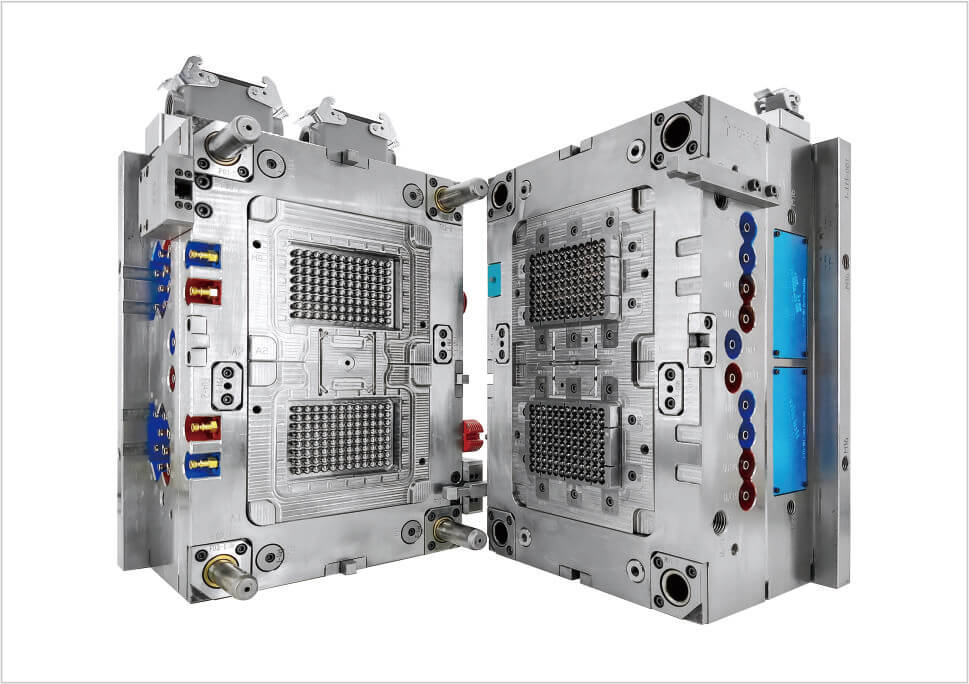
The Tray is a molded polypropylene component produced with a precision plastic injection mold. Designed with a 2-cavity configuration, this tooling is suitable for repeatable production of PP tray components where dimensional consistency, surface quality, and stable molding performance are important.
The original tooling specification uses 1 pc YUDO open tip, changed to a cold runner configuration. The cavity steel is 1.2343 ESR with HRC 50–52 hardness, and the mold follows the HASCO standard.
A plastic tray is a shallow molded component designed to hold, organize, support, or separate products and components. Depending on the final application, trays can be used in industrial equipment, electronics, packaging systems, household products, automotive assemblies, and material-handling applications.
A typical injection molded tray may include a flat base, surrounding walls, ribs, locating features, mounting points, or other structural details. These features need to be accurately reproduced by the mold to ensure that the finished tray maintains its intended shape and function.
Since the specific end application of this Tray is not provided, this project is best classified as a general PP injection molded tray.
Polypropylene (PP) is widely used for injection molded products because of its relatively low density, chemical resistance, good fatigue performance, and practical processing characteristics.
For tray applications, PP can provide a useful combination of lightweight construction and sufficient rigidity while remaining suitable for high-volume plastic injection molding.
Lightweight: PP has a relatively low material density.
Chemical Resistance: PP performs well against many common chemicals.
Fatigue Resistance: It can tolerate repeated flexing in suitable designs.
Processability: PP is widely processed using injection molding.
Cost Efficiency: PP is commonly selected for economical molded plastic components.
The PP injection molding process begins with plastic pellets being heated and plasticized inside the injection molding machine. The molten material is then injected through the runner system into the tray cavity under controlled pressure.
Material Preparation: PP pellets are prepared for the molding process.
Plasticization: The material is heated until it reaches the required processing condition.
Injection: Molten PP enters the mold through the runner and gate.
Packing: Additional pressure compensates for material shrinkage during solidification.
Cooling: The molded tray cools inside the cavity.
Ejection: The finished tray is released from the mold.
For a tray with a relatively large surface area, filling balance and cooling efficiency can have a significant effect on the final dimensional stability.
This tooling uses 2 cavities, allowing two tray components to be molded during each injection cycle.
A 2-cavity configuration can improve production efficiency compared with a single-cavity tool while keeping the tooling structure relatively manageable.
For consistent production, both cavities should be evaluated for filling, pressure distribution, cooling, shrinkage, and final dimensions. Balanced process conditions help reduce variation between the two molded parts.
The tooling specification identifies 1 pc YUDO open tip as the original runner configuration, which was changed to a cold runner system.
A cold runner system uses mold channels to transport molten plastic from the injection point toward the cavity. Unlike a hot runner system, the runner material generally solidifies together with the molded part during the cycle and is separated during part removal or post-processing.
Changing the runner configuration can affect material flow, cycle behavior, runner waste, gate location, pressure requirements, and overall tooling maintenance. The final runner design therefore needs to be matched to the PP material, tray geometry, production requirements, and available molding equipment.
A tray often has a relatively broad surface area compared with small molded components. If the material does not fill the cavity in a controlled manner, problems such as uneven shrinkage, warpage, weld lines, or short shots may occur.
Filling Balance: The molten PP should reach different areas of the cavity consistently.
Pressure Distribution: Injection pressure should remain within a suitable range.
Gate Position: Gate location affects flow direction and weld-line formation.
Warpage Control: Balanced filling and cooling help reduce deformation.
Surface Quality: The runner and gate design can influence visible flow marks.
The cavity is made from 1.2343 ESR steel with HRC 50–52 hardness.
For a production injection mold, cavity steel needs to maintain dimensional accuracy through repeated injection, cooling, mold opening, and ejection cycles.
The ESR specification also indicates a refined steel quality suitable for precision tooling applications. The specified hardness provides the required tooling condition for the cavity and other wear-critical mold areas.
The geometry of a tray creates several specific challenges for plastic injection mold design. Large flat surfaces are particularly sensitive to uneven cooling and material shrinkage.
Wall Thickness: Consistent wall sections help reduce uneven shrinkage.
Ribs: Reinforcing ribs need suitable thickness and draft to avoid molding defects.
Draft Angle: Proper draft helps the tray release from the cavity.
Cooling Layout: Cooling channels should provide balanced temperature control.
Ejection: Ejector locations should distribute force across the molded tray.
Flatness: Cooling and packing conditions need to be controlled to reduce warpage.
Warpage is one of the common dimensional challenges for large or relatively flat injection molded components. Different areas of the tray may cool and shrink at different rates, resulting in deformation.
Warpage control begins with product and mold design. Wall thickness, rib arrangement, gate location, cooling channel layout, packing pressure, and cooling time all need to be considered together.
During trial molding, the process window can be adjusted to find stable conditions that provide consistent tray flatness and dimensional accuracy.
Quality inspection for an injection molded tray should cover both appearance and functional dimensions.
Dimensional Inspection: Check overall dimensions, wall height, and critical interfaces.
Flatness: Verify that the tray remains within the specified deformation tolerance.
Wall Thickness: Check critical sections for consistency.
Surface Inspection: Look for sink marks, flow marks, weld lines, and scratches.
Gate Inspection: Verify the gate area and remove unacceptable gate vestige.
Assembly Fit: Confirm compatibility with mating components where applicable.
Before mass production, the mold can be evaluated through trial shots to confirm the interaction between the PP material, runner system, cavity geometry, cooling system, and injection parameters.
For the 2-cavity mold, both cavity outputs should be compared during validation. Consistent part weight, dimensions, filling behavior, and surface quality help establish a stable production process.
| Item | Specification |
|---|---|
| Part Name | Tray |
| Part Type | Plastic Injection Molded Tray |
| Cavity Number | 2 |
| Runner Type | 1 pc YUDO Open Tip Changed to Cold Runner |
| Part Material | PP |
| Cavity Steel | 1.2343 ESR |
| Steel Hardness | HRC 50–52 |
| Mold Standard | HASCO |
An injection molded tray is a shallow plastic component designed to hold, organize, support, or separate products or components. The exact application depends on the final product design.
The tray is molded from PP (polypropylene), a lightweight thermoplastic commonly used for injection molded products.
The mold has 2 cavities, allowing two tray components to be produced in one injection cycle.
The tooling specification indicates 1 pc YUDO open tip changed to a cold runner. The final tooling uses a cold-runner configuration for material delivery into the cavities.
Trays often contain relatively large flat surfaces, which can be sensitive to uneven shrinkage and cooling. Excessive warpage can affect flatness, dimensions, stacking, and assembly.
The cavity uses 1.2343 ESR steel with HRC 50–52 hardness and follows the HASCO mold standard.
This Tray project demonstrates the importance of runner design, cavity balance, cooling control, and dimensional inspection when manufacturing relatively broad PP components. The combination of a 2-cavity configuration, cold runner, and 1.2343 ESR cavity steel provides a tooling structure suitable for controlled plastic injection molding.
For customers developing PP trays, plastic trays, custom injection molded parts, large flat plastic components, and precision plastic products, mold design should be developed around the complete relationship between product geometry, material flow, cooling, ejection, and production requirements.
Explore custom plastic injection mold manufacturing at Youking Mould.