


 English

News
Fri 07 , 2026
Injection molding is one of the most efficient manufacturing methods for producing high-volume plastic parts. However, the quality of molded products depends heavily on the accuracy and reliability of the injection mold Tooling.
A well-Designed and precisely manufactured injection mold can improve product consistency, reduce production problems, and extend mold lifespan. For manufacturers, creating perfect injection mold tooling requires careful planning from design to final testing.
This article explains how to make injection mold perfect tooling, step by step, from design review to the final mold trial.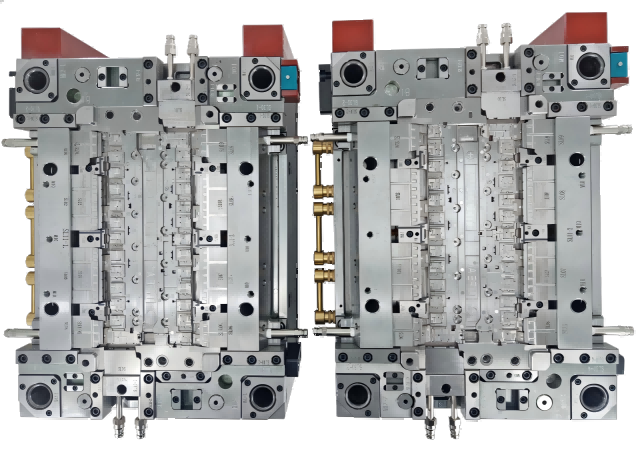
The foundation of perfect tooling begins with professional mold design.
Before manufacturing the mold, engineers need to analyze:
Product structure
Plastic material properties
Production volume
Mold complexity
Surface requirements
Dimensional tolerances
A good mold design helps prevent common issues such as:
Short shots
Warping
Sink marks
Flash defects
Uneven cooling
Using advanced CAD/CAE software allows engineers to simulate filling, cooling, and potential defects before machining begins.
Choosing suitable mold steel is essential for producing durable injection tooling.
Common mold materials include:
Suitable for:
Medium production runs
General plastic injection molds
Cost-effective tooling
Known for:
High temperature resistance
Good wear resistance
Long service life
Advantages:
Excellent corrosion resistance
High polishing performance
Suitable for optical and medical applications
The right material choice depends on:
Plastic type
Production quantity
Surface finish requirements
Expected mold lifespan
Precision machining plays a critical role in injection mold manufacturing.
Advanced machining equipment helps achieve tight tolerances through:
CNC machining
EDM machining
Wire cutting
Precision grinding
High-precision machining ensures:
Accurate mold dimensions
Smooth part surfaces
Stable production performance
For complex components, precision EDM machining can create detailed structures that traditional machining cannot achieve.
A perfect injection mold requires an optimized structure.
Important components include:
The cavity and core determine the final shape and accuracy of the plastic part.
A properly designed runner system ensures:
Balanced material flow
Reduced waste
Better filling performance
Efficient cooling channels help:
Shorten cycle time
Improve dimensional stability
Prevent deformation
A reliable ejection system prevents:
Part damage
Scratches
Production delays
Different plastics require different tooling solutions.
Common injection molding materials include:
| Material | Features | Applications |
|---|---|---|
| ABS | Good strength and surface finish | Electronics, automotive parts |
| PP | Lightweight and chemical resistant | Containers, household products |
| PC | High impact resistance | Transparent components |
| PA | Strong and wear resistant | Mechanical parts |
| POM | Low friction and high precision | Gears, industrial components |
Understanding material behavior helps engineers design molds with correct shrinkage compensation and cooling requirements.
Even a well-designed mold requires testing before mass production.
The mold trial process includes:
Engineers check:
Product dimensions
Filling condition
Surface quality
Ejection performance
Based on test results, improvements may include:
Modifying the cavity
Adjusting the runner system
Improving cooling channels
Fine-tuning injection parameters
Multiple trial runs help achieve stable production quality.
Quality control is essential for reliable injection mold tooling.
Professional mold manufacturers inspect:
Mold dimensions
Surface finish
Component accuracy
Assembly precision
Inspection equipment may include:
CMM measuring machines
Optical inspection systems
Precision measuring tools
Strict quality control ensures molds meet customer requirements before shipment.
Even high-quality molds require regular maintenance.
Recommended maintenance includes:
Cleaning mold surfaces
Checking moving components
Lubricating guide systems
Inspecting wear parts
Replacing damaged components
Proper maintenance extends mold lifespan and reduces unexpected downtime.
A perfect injection mold is not only about precision machining. It requires a combination of:
✔ Professional mold design
✔ High-quality mold steel
✔ Advanced manufacturing equipment
✔ Accurate machining processes
✔ Proper testing procedures
✔ Experienced engineers
All these factors work together to create reliable injection tooling for long-term production.
YouKing Mould provides professional injection mold manufacturing solutions for customers worldwide.
From initial mold design and engineering analysis to precision machining, mold testing, and production support, YouKing Mould helps customers develop reliable and high-performance injection molds.
With experience in custom injection molding projects, the company provides solutions for automotive, electronics, consumer products, and industrial applications.
If you need precision injection mold tooling, our engineering team can review your part, recommend the mold steel and cavity layout, and quote the tooling together with the custom injection mold tooling and precision mold inserts involved. See how the design stage works on our injection mold design page, or read what an unscrewing mold involves and how to choose a 2K mold manufacturer.
Send your 3D file, target resin and annual volume through our quotation page and we will return a DFM review with the tooling estimate.
Injection mold tooling refers to the process of designing and manufacturing molds used to produce plastic injection molded parts.
The lifespan depends on mold material, design quality, maintenance, and production conditions. High-quality molds can produce hundreds of thousands or millions of parts.
A good injection mold requires precise design, durable materials, accurate machining, efficient cooling, and reliable testing.
Mold testing helps identify design problems and ensures the mold produces consistent, high-quality parts before mass production.
There is no single step that makes tooling perfect. A reliable injection mold tooling manufacturer works through the same sequence every time: review the part design and run a DFM check, select the steel to match the resin and the annual volume, machine the cavity and core to the tolerance the part actually needs, design the runner, cooling and ejection systems together, then validate the tool in a mold trial before it is signed off. Skipping any one of those stages shows up as a defect later, usually after the tool has shipped.
Injection mold tooling quality control covers three separate things. First, dimensional inspection of the cavity, core, inserts and sliders against the 2D drawing. Second, the mold trial itself, where part dimensions, surface appearance, filling balance and cycle time are measured. Third, the documentation that goes with the tool: steel certificates, hardness readings, the trial report and a set of as-built drawings. A tool delivered without that documentation is difficult to maintain and difficult to duplicate.
Injection mold tool maintenance starts with a schedule rather than a repair. Between production runs, clean the cavities, check the water lines for scale and flow, lubricate the ejector plates and slides, and inspect the parting line for wear. Every 50,000 to 100,000 shots, measure the critical dimensions again and record them. Keeping the original tool drawings and spare cores, sliders and ejector pins on the shelf means a worn part is a same-week replacement instead of a multi-week rebuild.
We attach great importance to the customers' demands for product quality and rapid production.
We always believe that meeting the customers' needs is the realization of our value!