


 English

News
Tue 09 , 2026
As vehicles carry more onboard electronics and electric powertrains become standard across more platforms, the plastic components that hold, insulate, and connect automotive electrical systems have become some of the most tolerance-sensitive parts in a vehicle. An automotive electrical component mold has to produce parts that fit correctly the first time — a loose busbar holder or a misaligned adapter housing is not something that can be corrected after assembly.
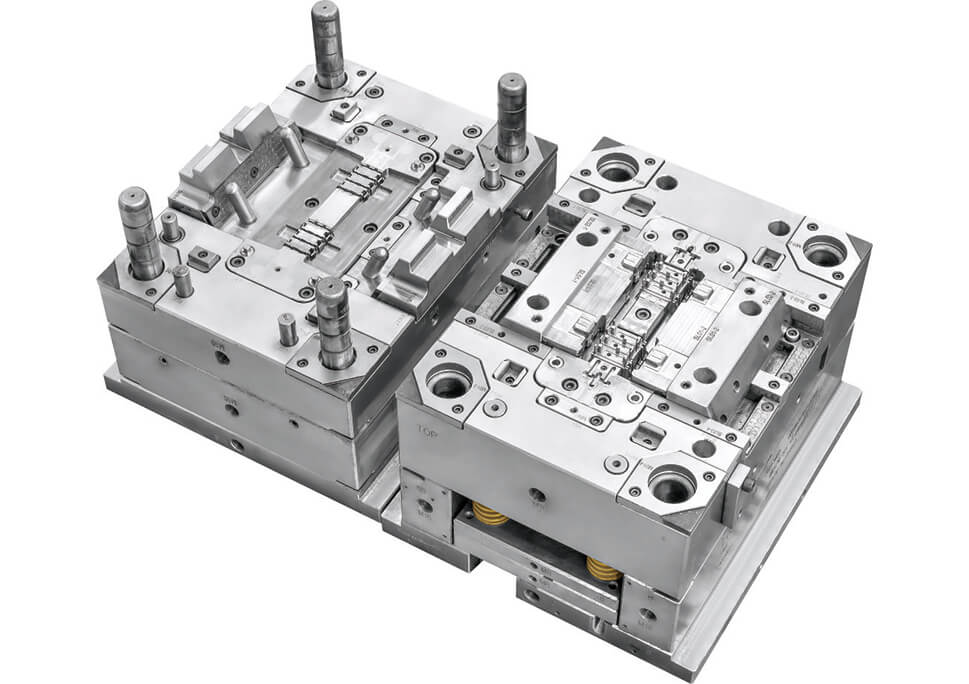
Automotive electrical parts typically sit at the intersection of two requirements that don't always align easily: mechanical fit and electrical safety. A part that is dimensionally correct but has insufficient insulation clearance can create a safety issue; a part with good insulation Design but poor dimensional control may not seat properly in the assembly. This is why mold-flow analysis and DFM (Design for Manufacturing) review are treated as mandatory steps before Tooling starts on this category of part, rather than optional add-ons.
Battery electric vehicle (BEV) platforms use busbars to carry high current between battery modules, inverters, and other power electronics. The plastic holder that secures and insulates these busbars needs to:
Maintain precise multi-point dimensional accuracy so the busbar sits correctly without stress on the connection
Provide consistent insulation clearance around each contact point
Hold up to thermal cycling in the battery compartment without dimensional drift over vehicle life
Producing a busbar holder mold reliably requires CMM (coordinate measuring machine) inspection of cavity and core inserts based on 3D model data, not just a visual check after machining. Because these parts often sit inside sealed battery enclosures where field inspection or rework is impractical, getting the tolerance right at the tooling stage — before mass production begins — matters more here than in most other automotive categories.
Have a busbar holder or EV electrical component to tool? Share your part drawing and target production volume for a quote within 24 hours.
Space inside modern vehicle electrical modules is limited, and low-profile connector adapters are designed to fit into tight installation envelopes without compromising electrical contact reliability. The tooling challenge with this part type is usually thin-wall molding: thinner wall sections are more prone to warping and inconsistent fill unless gate placement and cooling layout are carefully designed at the mold-flow stage. Hot runner systems are often used on this type of tooling to maintain consistent material flow into thin sections across a full production run.
For buyers sourcing tooling for busbar holders, connector adapters, or similar automotive electrical housings, a few capability questions are worth asking directly:
Does the supplier run mold-flow simulation before cutting steel, specifically to check fill behavior in thin-wall or multi-point geometries?
What inspection method is used to verify cavity and core dimensions — CMM against 3D data is the standard to look for, rather than manual gauge checks alone.
Does the supplier have documented experience with EV or automotive electrical programs, since insulation clearance and electrical fit requirements differ from general industrial connector parts.
What is the mold trial and documentation process — sample photos, trial video, and a dimensional report should be provided before mold shipment, not just a final finished-mold photo.
Automotive electrical components like EV busbar holders and low-profile connector adapters sit in a category where tolerance and insulation performance both need to be correct from the first production run. When evaluating a mold manufacturer for this type of project, prioritize suppliers who can show a documented DFM and mold-flow process, CMM-based inspection, and prior experience with automotive electrical or EV programs — not just general Automotive tooling capability.
Send us your electrical component drawing or sample for a free tooling feasibility review.
We attach great importance to the customers' demands for product quality and rapid production.
We always believe that meeting the customers' needs is the realization of our value!