


 English

News
Fri 11 , 2026

overmolding is a manufacturing process in which one material is molded over an existing component or substrate to create a combined part. In automotive manufacturing, it is commonly used to improve grip, sealing, impact resistance, insulation, and surface functionality.
By combining different materials in a single component, overmolding allows automotive designers to integrate multiple functions without relying entirely on separate parts and secondary assembly processes.
Overmolding typically involves two stages. First, a substrate is manufactured, often through conventional injection molding or another production process. Then, a second material is molded over selected areas of the substrate.
The substrate may be a rigid plastic component, a metal insert, or another compatible material. The overmolded layer can provide additional mechanical or functional properties.
Common material combinations include:
PC and TPE: Used when a rigid structure needs a softer exterior.
ABS and TPE: Suitable for selected automotive interior components.
PA and TPE: Used in applications requiring a combination of structural strength and flexibility.
Plastic and rubber-like materials: Applied to selected sealing, cushioning, and protective components.
Material compatibility is important. Some combinations achieve adhesion through chemical bonding, while others depend on mechanical interlocking or specially designed surface structures.
Overmolding can improve several functional characteristics of automotive parts.
Soft-touch materials can be molded over rigid plastic substrates to create more comfortable and slip-resistant surfaces.
This is useful for steering wheel controls, interior handles, adjustment knobs, and selected dashboard components.
Elastomeric materials can be overmolded onto rigid plastic components to create integrated sealing features.
These features may help limit the entry of dust, moisture, and other contaminants in suitable automotive applications. The final sealing performance depends on material selection, compression design, and dimensional accuracy.
A flexible overmolded layer can help absorb localized impacts and reduce direct contact between components.
For example, selected automotive housings and protective covers may use elastomeric sections to improve cushioning or reduce vibration-related contact.
Certain overmolding materials provide electrical insulation around conductive components.
This is useful in selected connectors, wiring-related components, and electronic assemblies, provided the material meets the required electrical and thermal specifications.
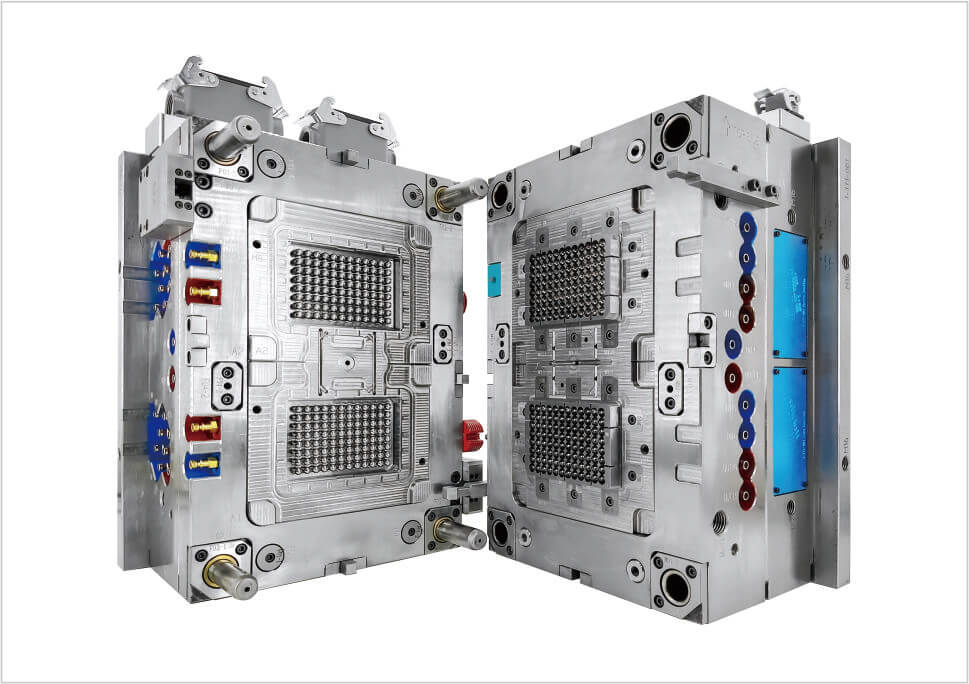
Overmolding is used in different vehicle systems, particularly where multiple material properties are required.
Automotive interiors: Soft-touch surfaces on handles, buttons, knobs, and control components can improve handling and user comfort.
Electrical connectors: Flexible materials may be molded around connector structures to provide insulation or environmental protection.
Sensor housings: Overmolded sections can help protect selected sensor assemblies from moisture, dust, and mechanical contact.
Sealing components: Elastomeric materials can be integrated into plastic housings and covers to support sealing functions.
Protective components: Flexible layers may be used on clips, covers, and selected brackets to reduce surface damage or vibration.
Overmolding quality depends on the interaction between the substrate, overmold material, and molding process.
The two materials must be suitable for the intended bonding method. Chemical adhesion, thermal behavior, and mechanical interlocking should be evaluated during product development.
The substrate may need grooves, holes, undercuts, or other structural features to improve mechanical retention when chemical bonding is insufficient.
Mold temperature, melt temperature, injection pressure, and cooling conditions influence material flow and bonding quality.
The substrate must be positioned correctly in the mold. Poor positioning can cause uneven overmold thickness, incomplete coverage, or dimensional deviations.
Depending on the application, manufacturers may conduct peel tests, adhesion tests, dimensional inspections, hardness measurements, and environmental testing.
Traditional assembly often requires separate components to be manufactured and joined through adhesives, fasteners, or mechanical connections.
Overmolding can integrate multiple functions into one component, potentially reducing part count and assembly operations. However, it may require more complex molds, additional tooling investment, and careful material compatibility testing.
The appropriate process depends on production volume, component geometry, performance requirements, and overall manufacturing cost.
Overmolding improves automotive plastic components by combining rigid substrates with flexible, insulating, or protective materials. It supports applications involving grip, sealing, cushioning, and electrical protection.
For automotive manufacturers, the main considerations are material compatibility, bonding strength, substrate design, and process stability. Properly designed overmolding can simplify component integration while meeting specific functional requirements.
We attach great importance to the customers' demands for product quality and rapid production.
We always believe that meeting the customers' needs is the realization of our value!
Copyright © 2026 YouKing Mould Co., Ltd All rights reserved.| Sitemap| Sitemap
Privacy Policy / Cookie Policy / Terms & Conditions