


 English

Products
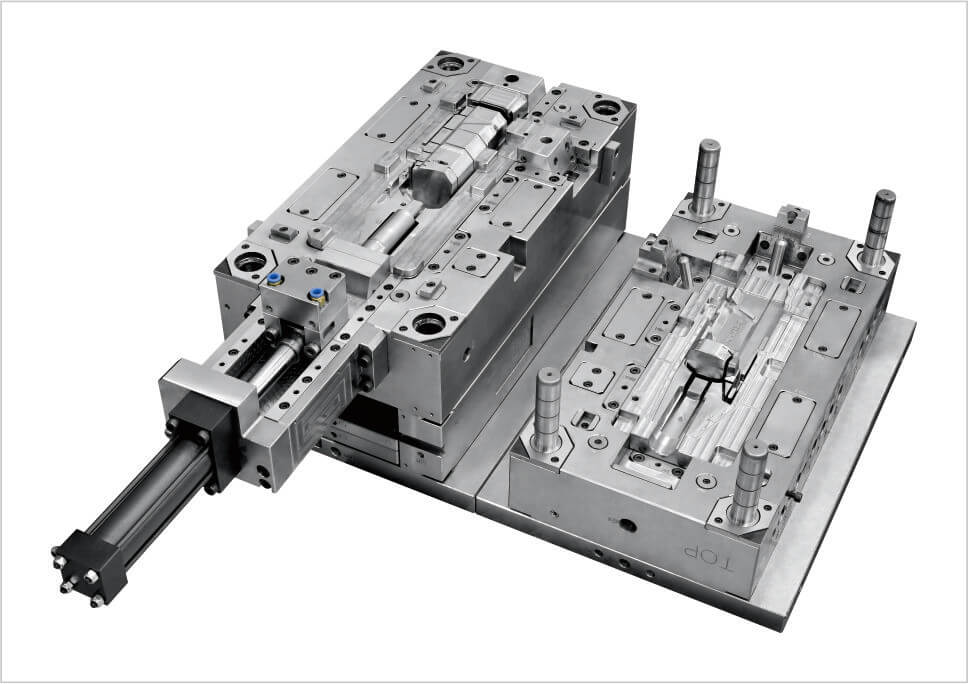
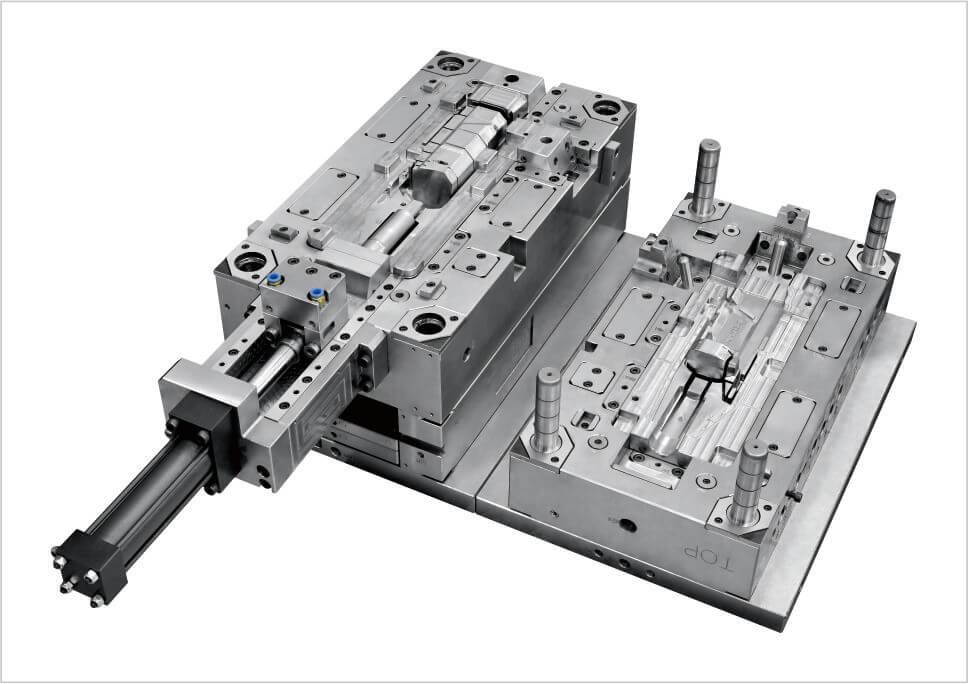
The Handle is a precision injection molded plastic component manufactured from PA66-GF30, a glass-fiber-reinforced nylon material Designed for applications requiring improved strength, stiffness, and dimensional stability.
This tooling uses a single-cavity configuration with a cold runner and sub gate. The cavity is manufactured from 1.2343 tool steel with HRC 48–52 hardness, and the mold follows the HASCO standard.
A molded Handle is a functional plastic component designed to provide a gripping, carrying, operating, or positioning interface between a user and a product.
Depending on the final application, a plastic handle may be used on equipment, tools, industrial products, consumer products, enclosures, or mechanical assemblies. Because the exact end application is not specified for this project, the component is described here as a general-purpose engineering plastic handle.
Unlike a purely decorative plastic part, a handle normally has functional requirements. The molded geometry needs to provide sufficient rigidity and dimensional stability while maintaining accurate mounting or connection features.
PA66-GF30 is a glass-fiber-reinforced polyamide 66 material. The addition of glass fiber can significantly improve stiffness and mechanical strength compared with unreinforced PA66.
For a functional handle, these properties can be useful where the component is exposed to gripping force, mechanical load, repeated operation, or dimensional requirements.
However, glass-fiber reinforcement also changes the behavior of the material during plastic injection molding. Fiber orientation, shrinkage, cooling, moisture content, and material flow can all influence the final dimensions of the molded handle.
PA66 materials are hygroscopic, which means they can absorb moisture from the environment. Proper material preparation and drying are therefore important before injection molding.
During molding, the glass fibers tend to orient according to the flow direction. This orientation can influence shrinkage and dimensional stability in different directions.
Material Drying: Moisture needs to be controlled before molding.
Flow Direction: Fiber orientation can affect dimensional behavior.
Wall Thickness: Sudden changes can increase shrinkage and warpage.
Cooling: Balanced cooling helps maintain dimensional consistency.
Ejection: The molded handle should be removed without deformation or damage.
The mold uses a 1-cavity configuration, producing one handle per injection cycle.
A single-cavity mold can be appropriate when the project requires close control of the molding process, specific production volumes, or detailed dimensional management.
With only one cavity, engineers can focus on maintaining consistent filling, packing, cooling, and ejection conditions for the individual component without the additional requirement of cavity-to-cavity balancing.
The tooling uses a cold runner with sub gate configuration.
The runner system provides the flow path for molten PA66-GF30 before the material enters the mold cavity through the sub gate. The position and size of the gate influence filling behavior, packing, gate vestige, weld-line formation, and local material orientation.
For a functional plastic handle, the gate should be positioned according to the product geometry and critical features. An unsuitable gate location may affect appearance, dimensional stability, or the mechanical characteristics of the molded component.
During the injection molding process, molten PA66-GF30 flows from the runner into the cavity. The gate determines where this flow begins and how the material reaches different sections of the handle.
Filling: The gate should provide a stable filling pattern.
Packing: Material needs to receive sufficient packing pressure before gate freeze.
Fiber Orientation: Gate position can influence the orientation of glass fibers.
Warpage: Uneven flow and shrinkage can contribute to deformation.
Appearance: Gate marks should be controlled where the surface is visible.
The cavity uses 1.2343 tool steel with HRC 48–52 hardness.
For a precision injection mold, cavity steel needs to maintain the required geometry through repeated thermal and mechanical cycles. The steel specification also needs to be considered during machining, finishing, mold assembly, and long-term maintenance.
The specified hardness provides a defined tooling condition for the cavity used to produce the PA66-GF30 handle.
The design of a handle injection mold needs to consider both the external gripping shape and the functional interfaces of the component.
Wall Thickness: Consistent sections help reduce uneven shrinkage.
Ribs and Reinforcement: Structural features need adequate draft and cooling.
Mounting Features: Holes, bosses, or attachment points require dimensional control.
Draft Angles: Appropriate draft supports smooth mold release.
Ejection: Ejector positions should avoid deforming functional areas.
Before production approval, the mold is normally subjected to trial molding to verify the interaction between the tool, PA66-GF30 material, and injection molding machine.
The trial process can be used to evaluate:
Filling behavior
Part weight
Critical dimensions
Warpage
Flash
Short shots
Weld lines
Gate condition
Surface quality
Assembly or functional fit
Process parameters such as injection speed, injection pressure, melt temperature, mold temperature, holding pressure, and cooling time can then be optimized to establish a stable injection molding process window.
For a PA66-GF30 handle, dimensional stability is important because glass-fiber orientation and material shrinkage can affect the final geometry.
Cooling imbalance, uneven wall thickness, inappropriate packing, or unfavorable gate positioning can contribute to warpage.
A suitable mold cooling system, controlled process parameters, and proper product geometry can work together to reduce dimensional variation.
Quality control for a functional injection molded handle should cover both dimensions and appearance.
Typical inspection areas include:
Critical Dimensions: Overall dimensions, mounting features, and mating surfaces.
Part Weight: Useful for monitoring filling consistency.
Warpage: Check for deformation that could affect assembly.
Surface Quality: Inspect weld lines, flow marks, sink marks, and flash.
Gate Area: Verify the condition of the sub-gate location.
The handle is molded from PA66-GF30, a glass-fiber-reinforced nylon 66 material designed for improved stiffness, strength, and dimensional stability.
The glass-fiber reinforcement can improve mechanical strength and stiffness compared with unreinforced PA66, making it suitable for functional components that may experience repeated mechanical loading.
The mold uses 1 cavity, producing one handle during each injection cycle.
The tooling uses a cold runner with sub gate. The runner and gate system controls how molten PA66-GF30 enters the cavity.
The cavity is manufactured from 1.2343 steel with HRC 48–52 hardness.
Material drying, glass-fiber orientation, gate position, cooling balance, wall thickness, injection parameters, and dimen sional inspection are important factors in stable PA66-GF30 injection molding.
This Handle project demonstrates the requirements involved in molding a functional engineering plastic component from PA66-GF30. Material preparation, cold-runner design, cavity accuracy, cooling, ejection, and process control all contribute to the consistency of the finished part.
For OEM and industrial customers developing PA66-GF30 injection molded parts, functional plastic handles, engineering plastic components, and custom injection molding projects, the tooling should be developed around the specific product geometry and production requirements.
Explore custom injection mold manufacturing at Youking Mould.