


 English

In plastic injection molding production, maintaining a clean injection molding machine is essential for achieving stable quality and reducing production waste. During resin changes, color changes, or long production cycles, residual plastic materials may remain inside the barrel, screw, and nozzle, causing defects such as black spots, contamination, and inconsistent appearance.
Understanding different injection molding purging methods helps manufacturers improve production efficiency, reduce downtime, and maintain consistent part quality. As a professional injection mold manufacturer, Youking Mould focuses on precision mold Design, advanced manufacturing processes, and reliable injection molding solutions for global customers.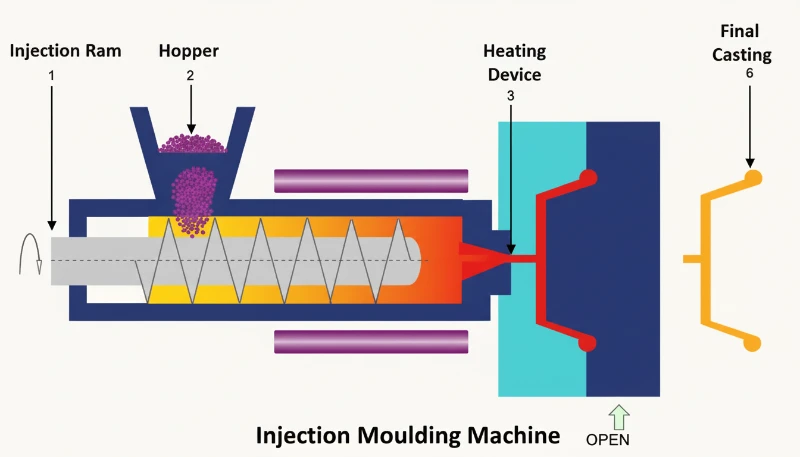
What Is Purging in Injection Molding?
Purging is the process of removing remaining plastic resin, degraded materials, and color residues from an injection molding machine before starting a new production run.
During the injection molding process, plastic materials are heated at high temperatures. Over time, some resin may degrade and stick to the internal surface of the barrel, screw, or nozzle. Without proper cleaning, these residues can affect the quality of molded components.
Common problems caused by insufficient purging include:
Black spots on plastic parts
Color contamination during material changes
Longer machine startup time
Higher scrap rates
Unstable injection molding quality
Main Injection Molding Purging Methods
1. Mechanical Purging Method
Mechanical purging is one of the most common cleaning methods used in injection molding production. This method uses new resin material to push out the remaining plastic inside the barrel.
The process usually includes removing old material, adding new resin, and running several injection cycles until the discharged material becomes clean.
Advantages include:
Simple operation
No special cleaning chemicals required
Suitable for regular resin changes
However, mechanical purging may not completely remove carbonized materials or heavy deposits inside the machine.
2. Purging Compound Method
Using a professional purging compound is an efficient solution for cleaning injection molding machines. Purging compounds contain special additives that help remove difficult residues, including degraded plastics and color contamination.
This method is widely used by manufacturers requiring fast material changes and stable production performance.
Benefits of purging compounds include:
Faster cleaning process
Reduced production downtime
Lower material waste
Improved machine cleanliness
3. Resin-to-Resin Purging
Resin-to-resin purging uses the next production material to remove the previous resin. It is commonly applied when changing between similar plastic materials.
For example, manufacturers may use this method when switching between different grades of PP, ABS, or PE materials.
This method is cost-effective but may not be suitable for serious contamination or large color changes.
4. High-Speed Purging
High-speed purging increases screw speed and material flow to improve cleaning performance. The stronger shear force helps remove remaining plastic from screw flights and barrel surfaces.
This method is often combined with other cleaning techniques during high-volume injection molding production.
How Purging Affects Injection Molded Parts Quality
A proper purging process directly influences the quality of injection molded products. When machines are properly cleaned, manufacturers can achieve:
Better surface finish
More accurate color consistency
Reduced production defects
Improved production efficiency
For precision projects requiring complex structures, choosing an experienced injection mold design partner is equally important. Proper mold structure, material selection, and production control work together to ensure stable results.
Purging Considerations for 2K Injection Molding
For advanced manufacturing processes such as 2K injection molding, machine cleanliness becomes even more important.
2K molding combines two different materials or colors into one finished component. Because multiple materials are processed within one production cycle, proper purging procedures help prevent cross-contamination and maintain bonding performance between materials.
Manufacturers producing multi-material components should carefully evaluate resin compatibility, temperature settings, and cleaning procedures before production.
How to Choose the Right Purging Method?
There is no single best method — the right choice depends on what you are switching from, what you are switching to, and how much downtime and scrap you can tolerate. The table below maps the common production situations to the purging method that suits them.
| What you are changing | Recommended method | Typical downtime | Scrap generated | Best fit |
|---|---|---|---|---|
| Same colour family, similar resins (e.g. PP to PE) | Resin-to-resin purging | Short | Low | Any machine |
| Dark to light, or to a transparent resin | Purging compound | Medium | Medium | Any machine |
| High-temperature to low-temperature resin (e.g. PC to PP) | Mechanical purging followed by a purging compound | Medium | Medium | Any machine |
| Frequent material changes, many short runs | High-speed purging | Shortest | Low | Machines fitted for high-speed purging |
| End of a production run | Mechanical purging (screw retraction and air shot) | Short | Low | Any machine |
Two factors sit underneath every row. The first is the machine itself: venting and runner design determine how quickly a barrel can be cleared, so purging performance is partly a mould design question rather than a cleaning question. Working with an experienced injection mold design partner is equally important. The second is the part: for high-precision plastic components, the acceptable level of residue is set by the tolerance and appearance specification, not by habit. A custom injection mold manufacturer can help optimize the entire manufacturing process from mold design to mass production.
Why Work With Youking Mould?
Youking Mould provides professional plastic injection mold solutions for customers worldwide. With expertise in mold design, precision manufacturing, and injection molding technology, the company helps customers develop reliable plastic parts for different industries.
From prototype development to mass production, Youking Mould focuses on quality control, manufacturing efficiency, and customized solutions.
If you are specifying a new Tool and want the venting, runner and cooling design reviewed before steel is cut, send us the 3D file, the target resin and your annual volume through our injection mold quotation page and our engineering team will come back with a DFM review and a tooling estimate.
Learn more about our plastic injection molding services and discover how professional mold manufacturing can improve your production performance.
Frequently Asked Questions About Purging
How often should you purge an injection molding machine?
Purge whenever the resin, the colour or the additive package changes, and before any planned shutdown. On a stable run of a single material, a routine purge at the end of the run is normally enough; on machines running many short jobs, purging becomes part of every changeover.
Can you use the same purging compound for all resins?
No. Purging compounds are matched to the processing temperature and to the resin being removed. A compound designed for a low-temperature commodity resin will not clean a high-temperature engineering polymer effectively, and using the wrong one can leave its own residue behind.
Does purging affect the quality of the first shots?
Yes, and this is the main reason purging matters. Residue left in the barrel, screw or nozzle shows up as black spots, streaks or colour contamination in the first parts produced. Those first shots should be checked before the run is released to production.
What is the difference between purging and cleaning an injection mold?
Purging clears the barrel, screw and nozzle — the machine side. Cleaning refers to the mould itself: venting, cavities and cooling channels. A contaminated mould will keep producing defects no matter how well the barrel was purged, so both are needed on a material change.
How much material does purging waste?
It depends on the machine size, the resin pair and the method. Mechanical purging generally consumes more resin, purging compounds less, and high-speed purging less again. Because the waste is concentrated in a small number of shots, the material cost is usually small next to the downtime it avoids.
Conclusion
Choosing the correct injection molding purging method is an important step in maintaining injection quality and production efficiency. Whether using mechanical purging, resin cleaning, or professional purging compounds, manufacturers should select the right method based on materials, machine conditions, and production requirements.
With proper machine maintenance and advanced mold manufacturing technology, companies can reduce defects, shorten downtime, and achieve consistent high-quality injection molded parts.