


 English

News
Fri 11 , 2026

automotive plastic components come in different shapes, sizes, materials, and structural designs. From dashboard components and interior trim to exterior covers and functional housings, each part may require a mould designed around its specific application.
This is why custom automotive mould solutions are important for automotive OEMs, component suppliers, and product developers. Rather than relying on a standard mould design, manufacturers need tooling that matches the component's geometry, material properties, production requirements, and quality expectations.
But what should you expect from a professional automotive mould manufacturer when developing a custom project?
A custom mould project should begin with an understanding of the component, not simply a mould quotation.
A professional manufacturer should review the product design and consider how its structure affects mould construction and the injection moulding process.
Key considerations include:
Component dimensions and wall thickness
Complex curves, ribs, bosses, and mounting features
Draft angles and parting line locations
Undercuts and movable mould structures
Gate positions and material flow
Dimensional and appearance requirements
For example, an automotive interior trim component may have a large curved surface and several mounting clips. Its mould design needs to account for both the visible surface quality and the dimensional accuracy of the installation features.
Engineering communication at this stage helps establish realistic technical expectations before production begins.
Automotive components have different functional and appearance requirements. A mould designed for a dashboard housing may not be suitable for a small connector housing or an exterior plastic cover.
A custom automotive mould manufacturer should consider the specific application when developing the tooling structure.
Common applications include:
Automotive interior parts: Dashboard panels, door trim components, console housings, and interior covers.
Automotive exterior parts: Plastic covers, grilles, protective components, and selected body-related parts.
Functional components: Brackets, housings, clips, and mounting components.
Electrical and electronic components: Connector housings, sensor covers, and protective enclosures.
The component's function, installation position, material, and appearance requirements all influence mould design.
Some projects may also require side actions, lifters, replaceable inserts, or other specialized structures to produce complex geometries.
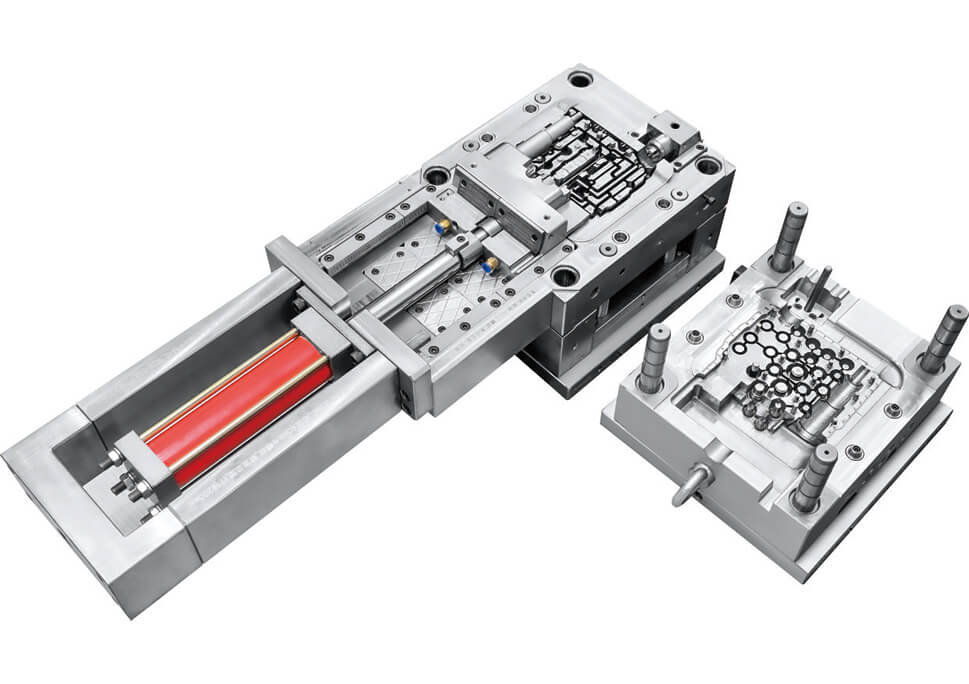
Material selection affects both the mould design and the performance of the final component.
Common plastics used in automotive applications include:
| Plastic Material | Common Characteristics | Typical Applications |
|---|---|---|
| PP | Lightweight and good chemical resistance | Interior trim and functional parts |
| ABS | Good impact resistance and surface appearance | Interior housings and covers |
| PC/ABS | Combines impact resistance and heat performance | Electronic housings and interior components |
| PA | Good mechanical strength and wear resistance | Functional and mechanical components |
| POM | Low friction and good dimensional stability | Clips, gears, and precision functional parts |
The actual material grade should be selected according to the component's operating environment, mechanical requirements, temperature exposure, and relevant automotive specifications.
The mould manufacturer also needs to understand the selected resin because different materials have different shrinkage characteristics and processing requirements. These factors influence cavity dimensions, cooling design, and moulding conditions.
Once the design and material requirements are established, the mould enters the manufacturing stage.
A custom automotive mould may involve several machining processes depending on its geometry and precision requirements.
CNC machining is commonly used for producing mould cavities, cores, and complex structural features.
EDM machining is useful for creating deep ribs, narrow grooves, sharp internal corners, and other features that are difficult to machine directly with conventional cutting tools.
Wire EDM can be applied to specific precision-cut components, while grinding and polishing help achieve the required dimensional accuracy and surface finish.
The manufacturer should select appropriate processing methods based on the mould structure rather than relying on a single machining process for every feature.
In addition, dimensional inspection during manufacturing helps verify that critical mould components meet the approved drawings.
A custom automotive mould should be evaluated through trial production before final acceptance.
During mould trials, the manufacturer checks whether the mould can produce components that meet the specified requirements.
The evaluation may include:
Component dimensions and assembly fit
Surface appearance and texture
Flash, sink marks, and short shots
Warpage and dimensional variation
Ejection performance
Mould operation and cycle stability
If problems are identified, the manufacturer should determine whether they are related to mould design, machining accuracy, material characteristics, or injection moulding parameters.
For instance, a dimensional deviation may be caused by material shrinkage or processing conditions rather than the mould cavity alone. Identifying the actual cause helps avoid unnecessary modifications.
Trial results should be discussed with the customer, especially when a component has strict assembly or appearance requirements.
Quality control should not be limited to the final inspection. It needs to be considered throughout the mould development process.
A professional manufacturer should have inspection procedures covering different production stages.
| Manufacturing Stage | Key Inspection Focus |
|---|---|
| Design review | Drawing requirements and mould structure |
| Material preparation | Mould steel specifications and material condition |
| Machining | Critical dimensions and geometric accuracy |
| Assembly | Component alignment and mechanical movement |
| Mould trial | Sample dimensions, appearance, and mould performance |
| Final inspection | Overall mould condition and agreed acceptance criteria |
For automotive projects, customers may also have specific documentation, traceability, or quality management requirements. These should be discussed before the project begins to determine what the manufacturer can provide.
Custom mould development often involves design changes, sample feedback, and technical discussions. Clear communication is therefore an important part of the manufacturing service.
Before starting a project, confirm how the manufacturer handles:
Drawing revisions and engineering changes
Design approval and mould modification
Trial sample feedback
Project progress updates
Spare parts and replacement components
Mould maintenance recommendations
Technical support after delivery
It is also important to clarify mould ownership, intellectual property protection, delivery scope, and responsibility for transportation.
These details should be documented in the project agreement so both parties understand their responsibilities.
To help a manufacturer evaluate your requirements, prepare as much of the following information as possible:
3D models and 2D product drawings.
Plastic material and grade requirements.
Component application and installation conditions.
Annual production volume or expected mould life.
Critical dimensions and tolerance requirements.
Surface texture, color, and appearance specifications.
Target delivery schedule and project milestones.
You can also provide reference samples or photographs when the design is still being developed.
The more clearly the requirements are defined, the easier it is for the manufacturer to assess the mould structure, manufacturing difficulty, and project scope.
A professional custom automotive mould manufacturer should provide more than mould machining. Engineering evaluation, application-based mould design, suitable material considerations, precision manufacturing, trial support, and quality inspection all contribute to a successful project.
For automotive businesses developing new plastic components, selecting a manufacturer that can understand technical requirements and communicate throughout the development process helps establish a more reliable production foundation.
If you have an automotive plastic component that requires a custom mould, prepare your drawings, material specifications, and production requirements for an initial technical evaluation.
We attach great importance to the customers' demands for product quality and rapid production.
We always believe that meeting the customers' needs is the realization of our value!
Copyright © 2026 YouKing Mould Co., Ltd All rights reserved.| Sitemap| Sitemap
Privacy Policy / Cookie Policy / Terms & Conditions